
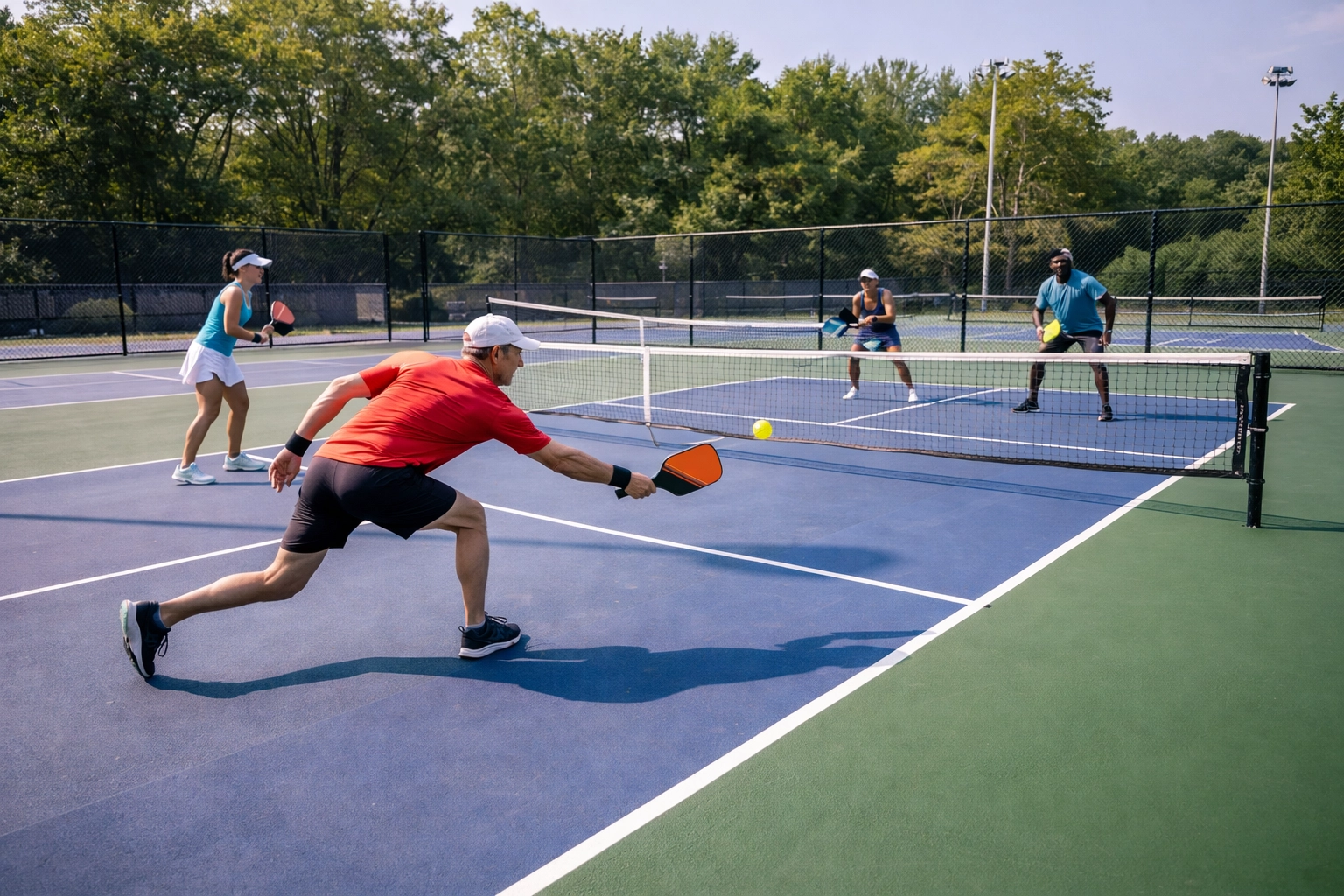
You’ve heard the distinct pop-pop-pop coming from the local tennis courts. You’ve seen your neighbors walking around with paddle covers slung over their shoulders. Maybe your coworker won’t stop talking about how they “got pickled” last weekend.
This pickleball 101 beginners guide covers everything you need rules, gear, lingo, and where to find your first game.
Welcome to the world of pickleball.
It’s not just a trend — it’s a full-blown movement. Whether you’re looking for a low-impact way to break a sweat, a social outlet to meet new people, or just a reason to get outside, this pickleball 101 beginners guide is your complete roadmap.
The best part? You don’t need to be an elite athlete to start. If you can swing a paddle and have a laugh, you’re ready to play.
Pickleball 101 Beginners Guide Welcome to America’s Fastest-Growing Sport
If it feels like pickleball is taking over the world, that’s because the numbers say it is.
According to the Sports & Fitness Industry Association (SFIA), pickleball has been the fastest-growing sport in America for three consecutive years. In 2023 alone, participation grew by a massive 51.8%, reaching 13.6 million players. Over the last three years, the sport has exploded by an extraordinary 223.5%.
By 2026, estimates put active players at nearly 20 million Americans — and the growth shows no signs of stopping.
Why the obsession?
It’s the great equalizer. Unlike tennis, which can take months of lessons just to keep a rally going, you can learn the basics of pickleball in about 15 minutes. We regularly see grandparents playing competitive matches against their teenage grandkids — and winning.
It’s incredibly social. The court is smaller (about a quarter the size of a tennis court), which means you’re physically closer to your opponents and partner. It’s genuinely hard not to make friends when everyone is that close together.
It fits your life. Whether you want a relaxed Saturday morning hit or a competitive league night, pickleball scales perfectly to your energy level and schedule.
It’s easy to learn but deep to master. You can enjoy your first session within minutes. But once you discover third shot drops, stacking formations, and kitchen battles — you’ll realize this game goes as deep as chess.
Pickleball 101 Beginners Guide – Step 1: Master the Rules
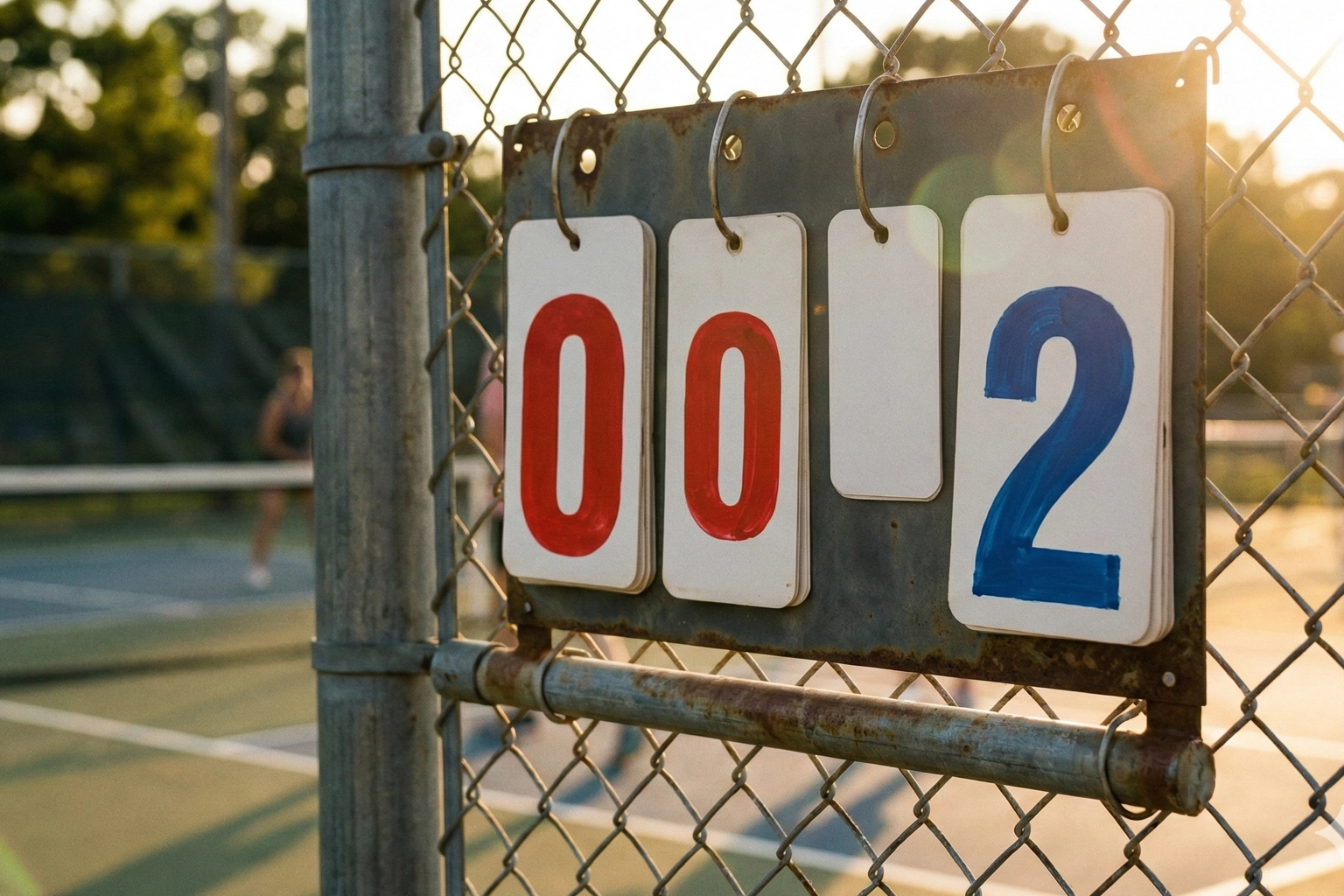
Let’s be real: the first time you hear someone shout “0-0-2!” before a serve, it sounds like they’re launching a nuclear code. Don’t panic. The rules are designed to keep the game fair and fun, and beginners only need to focus on a handful of core concepts to get a game going.
The Court
A pickleball court measures 44 feet long and 20 feet wide — the same dimensions as a badminton court. The net sits at 36 inches on the sides and drops to 34 inches in the center. That smaller footprint is one of the key reasons the sport is so accessible — there’s simply less ground to cover than in tennis.
The Serve
Every point starts with an underhand serve. Overhand serves are illegal — no exceptions. The server must keep both feet behind the baseline when striking the ball, and the serve must land in the diagonal service box on the opposite side of the net.
One important detail: the serve cannot land in the kitchen (the non-volley zone near the net). If it does, it’s a fault and the serve switches sides.
The Two-Bounce Rule
This is one of pickleball’s most unique rules — and the one that makes the game genuinely different from tennis.
After the serve, the receiving team must let the ball bounce once before returning it. Then the serving team must also let that return bounce once before hitting it. After those two bounces have occurred, both teams can volley freely.
Why does this rule exist? It eliminates the serve-and-volley advantage that dominates tennis, forces longer rallies, and keeps the game competitive for players of all levels. It’s one of the smartest design decisions in the sport.
The Kitchen — The Most Strategic Zone on the Court
If there’s one rule every beginner must memorize before stepping on the court, it’s this: stay out of the kitchen when volleying.
The kitchen is the non-volley zone — a 7-foot area on both sides of the net. You cannot volley (hit the ball out of the air) while standing in this zone or on its lines. Step into the kitchen to hit a volley, and you lose the point immediately.
Here’s the nuance: you can step into the kitchen to hit a ball that has already bounced. The restriction only applies to volleys.
The kitchen is where pickleball’s most strategic, high-stakes moments happen. Mastering the soft game — keeping the ball low, forcing opponents into difficult positions at the kitchen line, and then attacking — is the defining skill that separates beginners from intermediate players.
Scoring Basics
Pickleball uses a side-out scoring system. Only the serving team can score points. If the receiving team wins a rally, they earn the serve — but no point.
Games are typically played to 11 points, with a win-by-2 requirement. Tournament games often go to 15 or 21.
The score is called out as three numbers before every serve: Serving team score – Receiving team score – Server number.
In doubles, each team gets two serves (one per player) before losing the serve — except at the very start of the game, where the first serving team only gets one serve. This prevents the first team from building an early advantage.
So when you hear “4-2-1,” it means: serving team has 4 points, receiving team has 2, and the first server is serving. When the first server loses their rally, they call “4-2-2” and the second server takes over.
Understanding the court is essential in any pickleball 101 beginners guide.
For the complete official rulebook, visit: https://usapickleball.org
Step 2: Get the Right Gear
The second part of this pickleball 101 beginners guide covers the gear you actually need to get started.
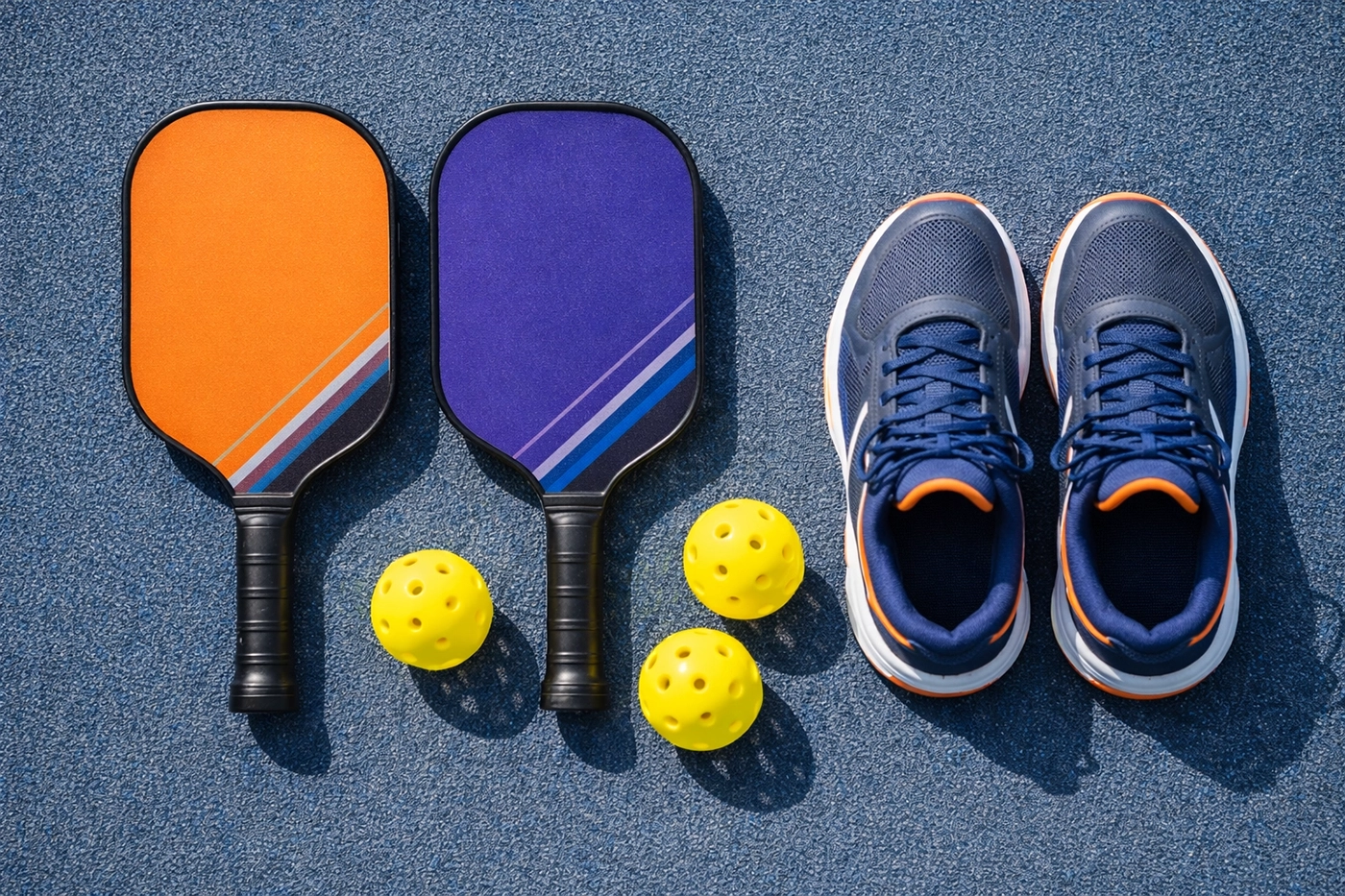
One of the best things about pickleball is the genuinely low barrier to entry. You don’t need helmets, pads, or thousands of dollars in equipment. However, making the wrong choice — particularly on shoes — can lead to real injury.
The Paddle
Your paddle is your only major investment. The good news: you don’t need to spend $200+ to get started.
Avoid wooden paddles. Those heavy rental-bin paddles found at rec centers are cheap for a reason they’re unforgiving, arm-fatiguing, and a reliable path to tennis elbow within a few sessions.
Look for composite or fiberglass paddles in the $50-$100 range. They’re lighter, quieter, have better control, and will genuinely help you improve faster. Once you’ve been playing for a few months and know your preferred playing style, you can consider upgrading to a carbon fiber paddle.
Key specs to look for as a beginner:
- Weight: 7.5-8.2 oz (midweight forgiving and easy to control)
- Grip size: 4-4.25 inches for most players
- Core thickness: 16mm (larger sweet spot, more forgiveness)
👉 We tested 20+ paddles across every price point. See our complete Best Pickleball Paddles for Beginners 2026 guide before spending a dollar.
The Ball
Pickleballs are plastic with holes similar to wiffle balls but engineered specifically for the sport.
There are two types:
- Indoor balls: Softer plastic, larger holes, slower flight
- Outdoor balls: Harder plastic, smaller holes, heavier to cut through wind
If you’re just starting out and playing outside (which most beginners are), grab a 3-pack of outdoor balls. They’re durable, widely available, and work on most hard court surfaces.
The Shoes Do NOT Skip This
This is the most important gear decision you’ll make as a new player and the one most beginners get wrong.
Do not play pickleball in running shoes. Running shoes are engineered for forward motion. Pickleball is a sport of explosive lateral (side-to-side) movement. Wearing running shoes on a pickleball court significantly increases your risk of rolling an ankle on a quick change of direction.
You need court shoes — specifically designed for tennis, volleyball, or pickleball. They’re flat, stable, and have reinforced lateral support to keep your foot locked in place during quick cuts.
If you’re serious about the sport (and you will be), proper footwear is non-negotiable.
Every pickleball 101 beginners guide will tell you the same thing proper footwear is non-negotiable.
👉 See our tested guide: Best Pickleball Shoes 2026
Step 3: Learn the Lingo
No pickleball 101 beginners guide is complete without covering the language of the sport.Walk onto a pickleball court for the first time and you might think people are speaking a completely foreign language. Knowing a few key terms will help you blend in immediately — and avoid embarrassing yourself.
Dink: A soft, controlled shot hit from the kitchen line that arcs gently over the net and lands in the opponent’s kitchen. The dink is the foundation of advanced play — mastering it separates beginners from competitive players.
Banger: A player who hits every single ball as hard as possible. Bangers are common among beginners. Don’t be a banger — learn the soft game.
Third Shot Drop: One of the most important shots in pickleball. The serving team’s third shot (after serve and return) is hit softly into the kitchen, neutralizing the receiving team’s net advantage. Mastering this shot is the key to transitioning from beginner to intermediate.
Kitchen: The 7-foot non-volley zone near the net. Also called the NVZ. Do not volley from here.
Pickled: Losing a game 11-0. It happens to everyone eventually, including experienced players.
Erne: An advanced shot where you jump around (not over) the kitchen corner to volley the ball. Spectacular when executed correctly.
Bert: Similar to the Erne, but your partner executes it on their side of the court instead of you on yours.
Stacking: A doubles strategy where both partners line up on the same side before the serve, then reposition immediately after. Used to keep stronger players in their preferred positions.
ATP (Around the Post): A legal (and impressive) shot where you hit the ball around the net post instead of over it. One of pickleball’s most crowd-pleasing plays.
Side Out: When the serving team loses the rally and the serve switches to the other team.
👉 Want the complete glossary? Read our full Pickleball Terminology Guide — every term explained simply.
Step 4: Find Your First Game
The final step in this pickleball 101 beginners guide is finding your first game. Knowing the rules is one thing. Actually stepping onto a court for the first time is where the learning really begins.
Here’s how to find your first game without any awkwardness:
Drop-in sessions at local rec centers are your best starting point. Most parks and recreation departments now offer beginner drop-in hours specifically for new players. The atmosphere is relaxed, experienced players are usually happy to explain rules, and you’ll get real court time immediately.
The “open play” culture in pickleball is genuinely unique. Unlike tennis, where courts are often booked for private matches, pickleball courts typically use a paddle rotation system — you put your paddle on the fence, wait for an open spot, and rotate in. Just walk up, introduce yourself as new, and you’ll be playing within minutes.
Community Facebook groups are another great resource. Search “pickleball [your city]” and you’ll almost certainly find an active local group with scheduled sessions, skill levels noted, and welcoming regulars.
👉 Find courts near you right now: Pickleball Courts Near Me — 7 Ways to Find One in 2026
Your Pickleball 101 Journey Starts Now
This pickleball 101 beginners guide has covered everything you need to step onto a court with confidence — the rules, the gear, the lingo, and where to find your first game.
The only thing left is to actually show up.
Most beginners are surprised by two things: how quickly they pick up the basics, and how immediately addicted they become. There’s something about the combination of strategy, social energy, and that satisfying pop of paddle on ball that gets into your head fast.
Everything in this pickleball 101 beginners guide points to one conclusion: show up, swing, and laugh.
See you on the court.
Continue Your Pickleball 101 Journey: