
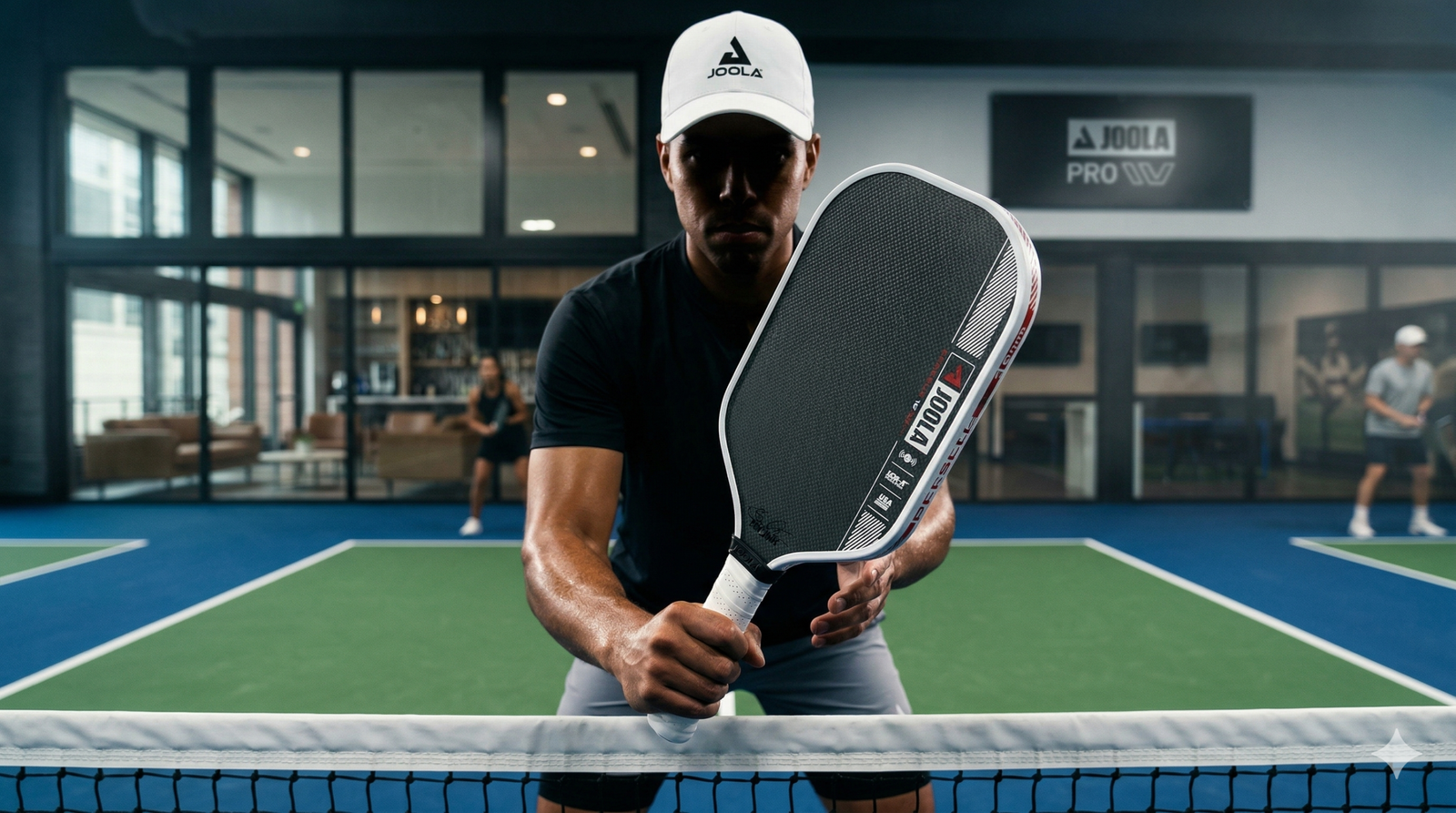
JOOLA Ben Johns Perseus Pro IV 16mm Review 2026 - Brutally Honest Assessment
The JOOLA Ben Johns Perseus Pro IV is built for one purpose: to give advanced players the most explosive thermoformed power available under the JOOLA name. Ben Johns has won more professional pickleball titles than any player in history, and this is his paddle of choice in 2026.
At $229.95 the Perseus Pro IV is a serious investment. This review tells you exactly who it is built for, what it delivers on court, and whether the price is justified.
Our Verdict, JOOLA Ben Johns Perseus Pro IV
✅ Best premium paddle for intermediate-advanced players
✅ USAPA approved, tournament legal
✅ Carbon fiber face, exceptional spin & control
✅ Ideal for: players ready to invest in performance
❌ Not for: beginners or budget-conscious players
JOOLA Ben Johns Perseus Pro IV 16mm, Technical Specifications
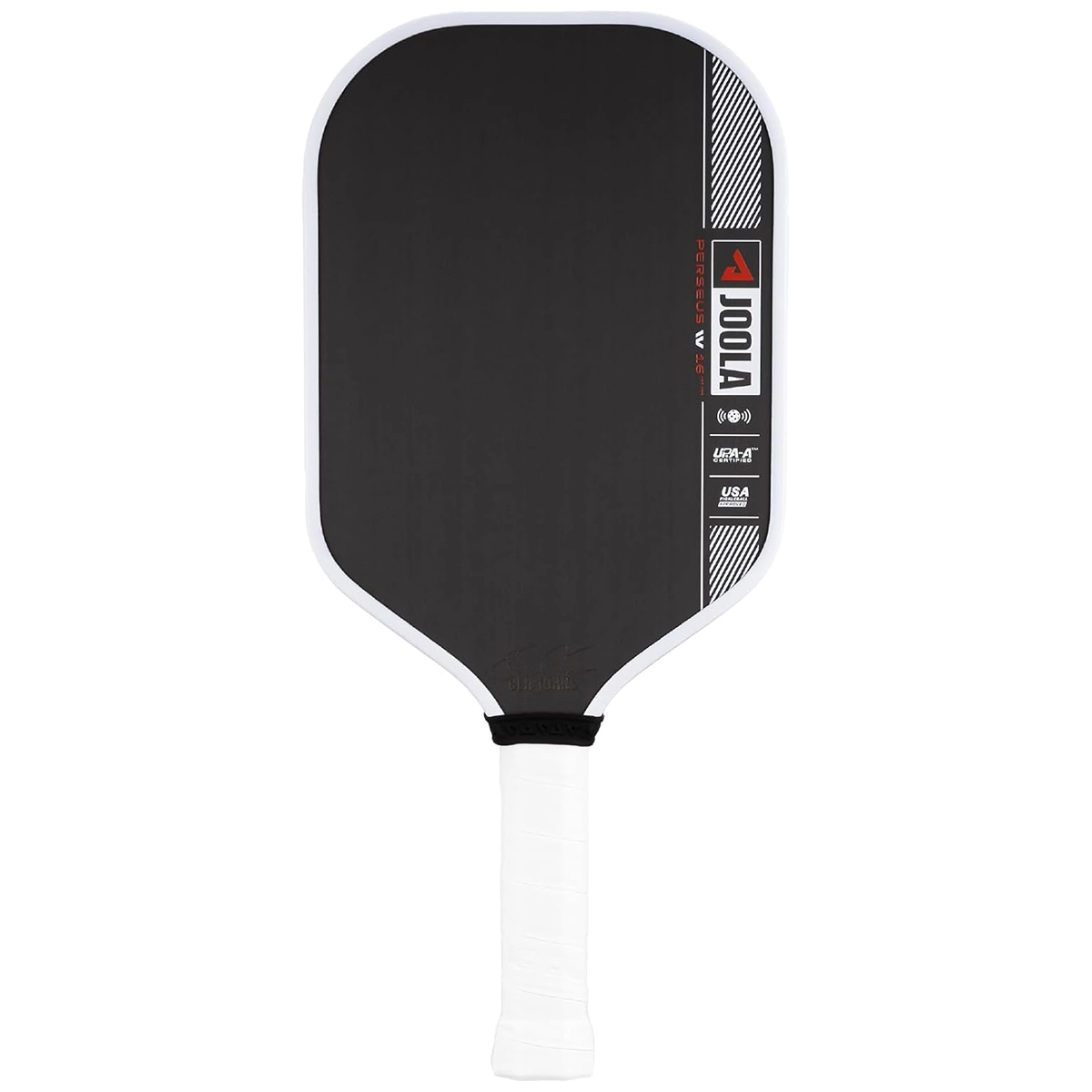
JOOLA Ben Johns Perseus Pro IV 16mm, Performance Review
The Perseus Pro IV uses JOOLA’s latest Charged Carbon Surface and TechFlex Power technology, a full thermoformed construction that creates exceptional stiffness and explosive pop. Players consistently describe the feel as the most powerful and precise in the JOOLA lineup.
The 16mm Propulsion Core provides a massive sweet spot while maintaining the control needed for kitchen play. Unlike the original Perseus, the Pro IV addresses the handle fragility issues that plagued earlier models with a reinforced construction. Spin generation from the CFS surface is elite, on par with the best carbon fiber paddles at any price point.
The 3.9 star rating on Amazon reflects a transition period with some units experiencing edge issues, JOOLA has addressed this in later production runs. Player reviews from 2026 are significantly more positive. All specifications verified against USA Pickleball official standards.
JOOLA Ben Johns Perseus Pro IV 16mm, What We Found
- + Full thermoformed construction, maximum power and pop
- + Charged Carbon CFS surface, elite spin generation
- + 16mm Propulsion Core, massive sweet spot
- + Ben Johns signature paddle, tournament-proven at highest level
- + Reinforced handle vs original Perseus
- + USAPA approved for tournament play
- - $229.95, significant investment
- - 3.9 star Amazon rating concerns some buyers, verify current production run
- - Not ideal for control-focused recreational players
- - Power can be overwhelming for players below 4.0 level
What Makes the Perseus Pro IV Different: The Technology Explained
The Perseus Pro IV is built around three proprietary technologies that work together to create its distinctive power-and-control balance. Understanding what each one does, and why it matters on court, is the clearest path to knowing whether this paddle is the right investment for your game.
Charged Carbon CFS Surface
The Charged Carbon Friction Surface is JOOLA’s premium surface treatment, applied exclusively to their top-tier paddles. The texture is engineered at a microscopic level to maximize the contact time between ball and paddle face on every strike. More contact time means more opportunity to impart spin, which is why the CFS surface consistently generates more spin per swing than standard carbon fiber or graphite alternatives.
Critically, the CFS surface maintains its texture under competitive use significantly longer than cheaper carbon surfaces. Budget carbon paddles often show noticeable texture degradation within 30-40 hours of heavy play. The Charged CFS surface holds its performance characteristics well past that threshold, an important consideration at the $229.95 price point, where you expect the investment to last.
TechFlex Power Technology
TechFlex is JOOLA’s full thermoforming process, the paddle head, throat, and handle are formed as a single continuous piece under heat and pressure rather than assembled from separate components. The result is a paddle with zero seam points where energy can dissipate on contact. Every joule of energy from your swing transfers directly into ball velocity rather than being absorbed by adhesive joints or assembly tolerances.
In practical terms, TechFlex paddles generate ball speed that is measurably faster than non-thermoformed paddles at equivalent swing speeds. Players transitioning from standard construction paddles frequently describe the sensation as the ball “jumping off” the face, which is an accurate description of what thermoforming actually delivers.
16mm Propulsion Core
The 16mm polypropylene honeycomb core is thicker than the 14mm cores used in most power-oriented paddles. Thicker cores extend the dwell time, the fraction of a second the ball stays in contact with the paddle face. Extended dwell time gives you more control over placement and spin on touch shots, which prevents the Perseus Pro IV from becoming a paddle that only performs well on drives and serves.
The combination of TechFlex thermoforming for power and a 16mm core for touch creates a paddle that is genuinely competitive across all shot types, not just groundstrokes.
JOOLA Ben Johns Perseus Pro IV 16mm, Our Ratings
The Perseus Pro IV delivers the most explosive thermoformed power in the JOOLA lineup. For advanced players who want Ben Johns' exact tournament equipment, the performance justifies the premium price. Players below 4.0 level should consider the Hyperion instead.
If you are a serious competitive player at 4.0 level or above who wants the absolute pinnacle of JOOLA’s paddle technology, the Perseus Pro IV is the correct choice. For everyone else, the JOOLA Hyperion CFS 16 delivers 90% of the performance at less than half the price.
Who Should Buy the JOOLA Perseus Pro IV, And Who Should Not
The Perseus Pro IV is one of the most player-specific paddles in competitive pickleball. It is exceptional for the right player and unnecessary for everyone else. Knowing which side of that line you fall on before purchasing saves $230.
Buy the Perseus Pro IV if:
You play at 4.0 level or above. Below 4.0, the thermoformed performance advantage is difficult to consistently access because it requires mechanics that generate sufficient swing speed and precise contact timing to unlock the paddle’s capabilities. A 3.5 player with a Perseus Pro IV will not outperform a 3.5 player with a Hyperion CFS, the equipment advantage requires technical execution to realize.
You play competitively, leagues, tournaments, or serious club play, four or more times per week. The Perseus Pro IV is built for players who need every marginal performance advantage available and who will actually use the paddle enough to justify the investment. Casual recreational players who play once or twice a week will not recover that investment in performance gains.
Your game is built around power and spin rather than pure control and patience. The thermoformed construction is optimized for players who win points with velocity and spin, not players whose strategy depends primarily on soft dinking and reset play.
Do not buy the Perseus Pro IV if:
You are a beginner or intermediate player under 3.5. The JOOLA Hyperion CFS 16 at $107 delivers 85-90% of the performance at less than half the price and is better matched to developing mechanics. You will improve faster on a paddle that forgives technique errors rather than one that demands precise execution on every contact.
You have a history of arm or elbow issues. Full thermoformed paddles transmit more vibration than paddles with EVA foam perimeter protection. If you have experienced tennis elbow or pickleball elbow previously, the Perseus Pro IV is a risk. Consider the Hyperion CFS 16 or Selkirk SLK ERA Power instead, both incorporate vibration dampening specifically designed for arm protection.
JOOLA Ben Johns Perseus Pro IV 16mm, FAQ
Is the JOOLA Perseus Pro IV worth the price?
For competitive players at 4.0 level and above who want Ben Johns tournament equipment, yes. For recreational players, the JOOLA Hyperion at $107 delivers excellent performance at a fraction of the cost.
What is the difference between the JOOLA Perseus and Perseus Pro IV?
The Perseus Pro IV features updated Charged Carbon CFS surface, TechFlex Power thermoformed construction, and a reinforced handle to address fragility issues that affected earlier Perseus models.
Why does the JOOLA Perseus Pro IV have a 3.9 star rating?
Early production runs experienced edge and handle issues. Later 2026 production runs have addressed these concerns. Read recent reviews before purchasing.
Is the JOOLA Perseus Pro IV good for beginners?
No. The power and stiffness requires developed mechanics to control. Beginners should start with the JOOLA Hyperion or Vatic Pro Prism Flash.
Is the JOOLA Perseus Pro IV USAPA approved?
Yes. The JOOLA Ben Johns Perseus Pro IV is USAPA approved. Verify current status at usapickleball.org.
JOOLA Perseus Pro IV vs. The Competition
The Perseus Pro IV competes in the premium thermoformed market against the Selkirk Vanguard Power Air, the Franklin Ben Johns Signature, and JOOLA’s own Hyperion CFS 16. Understanding where it stands relative to these alternatives clarifies exactly when it is the right choice.
Perseus Pro IV vs. JOOLA Hyperion CFS 16 ($107)
This is the most important comparison for most buyers considering the Perseus Pro IV. The Hyperion CFS 16 is not a lesser paddle, it is a different tool. The Hyperion uses a non-thermoformed construction with Hyperfoam perimeter protection, which delivers superior vibration dampening and a softer, more touch-oriented feel. The Perseus Pro IV delivers more raw power and spin ceiling; the Hyperion delivers more arm protection and forgiveness on off-center hits.
The recommendation is consistent: players above 4.0 who prioritize power choose the Perseus Pro IV. Players between 3.0 and 4.0, and any player with arm sensitivity, choose the Hyperion. The $123 price difference is secondary to this performance profile distinction.
Perseus Pro IV vs. Selkirk SLK ERA Power ($200)
The ERA Power is the closest legitimate competitor to the Perseus Pro IV in the thermoformed premium market. The ERA Power uses Selkirk’s Dynamic Fusion Core with EVA foam, which provides more vibration dampening than the Perseus Pro IV’s pure thermoformed construction while maintaining competitive power output. Players who want thermoformed performance with arm protection favor the ERA Power. Players who want maximum thermoformed power without compromise favor the Perseus Pro IV.
Perseus Pro IV vs. Vatic Pro Prism Flash ($130)
The Vatic Pro Prism Flash offers carbon fiber performance at a significantly lower price point and has a strong reputation among value-conscious intermediate players. However, the thermoformed construction of the Perseus Pro IV creates a power and spin ceiling that the Vatic Pro simply cannot match. For players who have maximized what the Vatic Pro can do for their game and are ready to invest in genuine performance gains, the Perseus Pro IV is the correct upgrade path.
More Pickleball Paddle Reviews
Getting the Most Out of Your Perseus Pro IV, 4 Tips
Players who switch to the Perseus Pro IV from standard construction paddles consistently need an adjustment period of 3-5 sessions before they reach peak performance. These four tips accelerate that process.
1. Lower your grip pressure during the adjustment period.
The thermoformed construction amplifies your swing mechanics, including tension. Players who grip the Perseus Pro IV as tightly as their previous paddle will find shots going long more frequently than expected. Start with 40-50% of your normal grip pressure and build up from there. The paddle generates power efficiently; you do not need to force it.
2. Shorten your backswing on drives initially.
The TechFlex power technology means the Perseus Pro IV delivers more ball speed at equivalent swing effort than most paddles. Your muscle memory is calibrated to your previous equipment. Shortening your backswing by 10-15% during the first week allows you to calibrate your feel for the paddle’s power output without hitting every drive long.
3. Practice kitchen dinks specifically during the break-in period.
The 16mm core provides excellent touch, but the thermoformed face has a different tactile feedback from non-thermoformed paddles. Spending dedicated time on kitchen dinks in your first three sessions builds the feel calibration that makes the Perseus Pro IV equally effective at the net and from the baseline.
4. Check your handle grip size before playing competitively.
The Perseus Pro IV ships with a standard grip circumference. If you have larger or smaller hands than average, adding overgrip tape or replacing the grip before your first session will prevent the compensatory mechanics that can develop when grip size does not match hand size. Grip fit affects every shot, address it before habits form.
