
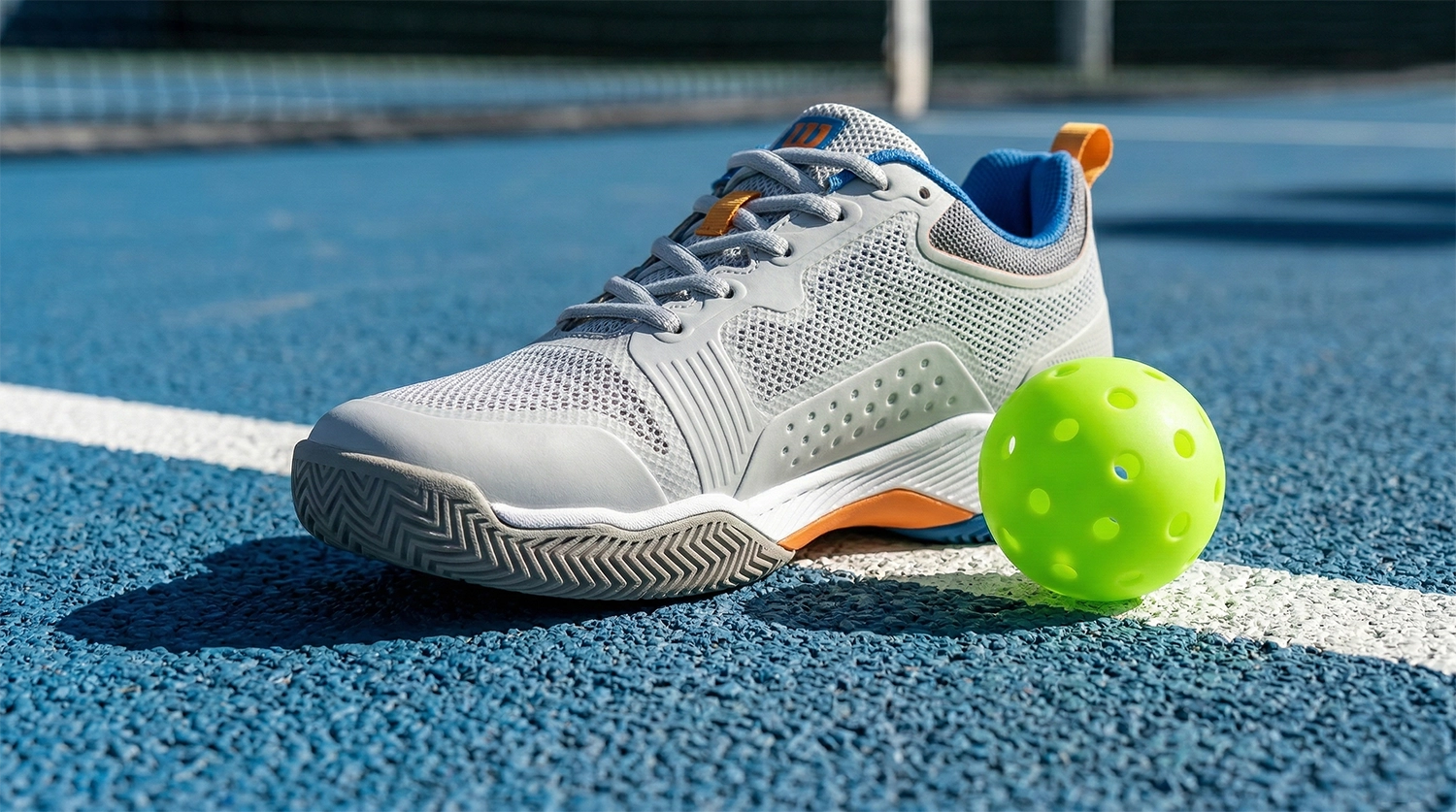
The 3 Best Pickleball Shoes for Wide Feet in 2026: Stop Squeezing Your Toes
Squeezing wide feet into narrow pickleball shoes is a recipe for disaster – not just blisters, but bunions, plantar fasciitis, and chronic ankle injuries.
For a full breakdown of every category, visit our best pickleball shoes guide
The worst mistake wide-footed players make is buying shoes a size too big. Extra length does not equal extra width. It causes heel slip, which causes ankle rolls on lateral cuts.
You need genuine pickleball shoes for wide feet, built on a true wide last. Below are the 3 best options in 2026.
Best Pickleball Shoes for Wide Feet, Our Top 3 Picks for 2026
| Shoe | Best For | Width | Outsole | Score | Price |
|---|---|---|---|---|---|
| FitVille Amadeus👟 Best Budget | Budget Players | 2E/4E/6E | Non-marking | 9.0 | ~$60 |
| Skechers Viper Court Reload💪 Best Comfort | Comfort Priority | 2E Wide | Non-marking | 9.2 | ~$75 |
| K-Swiss Express Light🏆 Best Performance | Performance | Wide Option | Non-marking | 9.5 | ~$90 |
Why Wide Fit Matters More Than You Think
Most pickleball players with wide feet make the same mistake: they buy shoes one size larger to get more room. This is wrong and dangerous.
Extra length creates heel slip. Heel slip causes your foot to slideforward on lateral cuts, which is exactly the movement pickleball demands constantly. The result? Ankle rolls, black toenails, and chronic blister pain.
A genuine wide fit shoe built on a true wide last – gives you the extra room in the toe box and midfoot where you actually need it, while keeping your heel locked in place for safe lateral movement.
All three shoes on this list are built on verified wide lasts not just “wide width” labels slapped on standard molds.
If you are still unsure which type of shoe fits your game, check out our complete pickleball shoes buying guide before making your decision.
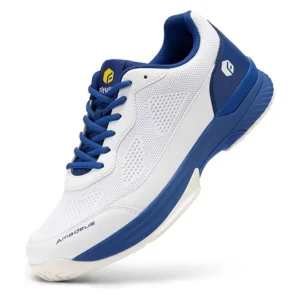
The FitVille Amadeus is one of the few genuine pickleball shoes for wide feet available in 4E and even 6E widths, making it the best budget choice for players who truly cannot fit into standard court shoes.
The wide last is built from scratch, not stretched from a standard mold. This means your toes have real room without compromising heel lockdown.
If you need wide toe box pickleball shoes specifically, the FitVille Amadeus delivers genuine width from heel to toe, not just a stretched standard fit
The non-marking outsole provides solid court grip, and the mesh upper keeps your feet cool during extended sessions.
- ✅ Available in 2E, 4E, and 6E, genuinely wide
- ✅ True wide last, not a stretched standard shoe
- ✅ Non-marking outsole, indoor/outdoor compatible
- ✅ Mesh upper, breathable during long play
- ✅ Best price for wide-fit court shoes (~$60)
- ❌ Less lateral support than K-Swiss
- ❌ Toe cap reinforcement less robust
- ❌ Less brand recognition than Skechers or K-Swiss
The FitVille Amadeus is the best pickleball shoe for wide feet on a budget, finally a genuine wide-last option that won't squeeze your toes or break the bank.
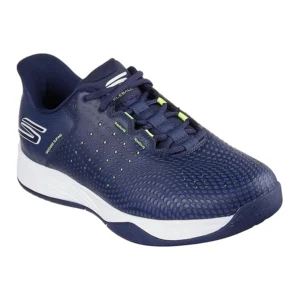
The Skechers Viper Court Reload combines a genuine wide fit with Skechers’ signature ULTRA GO cushioning, making it one of the most comfortable pickleball shoes for wide feet available.
The 2E wide construction gives your forefoot real breathing room while the GOGA MAX insole provides arch support that reduces fatigue during long sessions.
The non-marking outsole works on both indoor and outdoor courts, making this a versatile choice for players who move between venues.
- ✅ 2E wide construction, genuine roomy fit
- ✅ ULTRA GO cushioning, exceptional comfort
- ✅ GOGA MAX insole, excellent arch support
- ✅ Indoor and outdoor compatible
- ✅ Memory foam collar, comfortable ankle fit
- ❌ 2E only, not available in 4E
- ❌ Less lateral support than K-Swiss
- ❌ Cushioning compresses over time
The Skechers Viper Court Reload is the best pickleball shoe for wide feet who prioritize all-day comfort and cushioning during long court sessions.
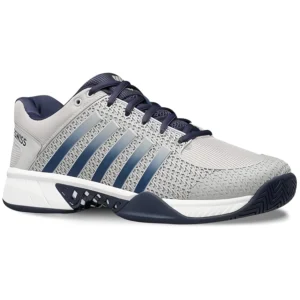
The K-Swiss Express Light is purpose-built for pickleball, and the wide option delivers elite lateral support for wide-footed players who refuse to sacrifice performance for fit.
The reinforced lateral sidewalls provide exceptional ankle protection during aggressive side-to-side movements. The flat pickleball-specific outsole keeps your center of gravity low.
The durable toe cap protects against the constant toe drag that destroys standard court shoes within months.
- ✅ Purpose-built for pickleball, not a converted tennis shoe
- ✅ Reinforced lateral sidewalls, best ankle protection
- ✅ Durable toe cap, resists toe drag wear
- ✅ Lightweight mesh upper, breathable
- ✅ Non-marking outsole, indoor/outdoor
- ❌ Higher price (~$90)
- ❌ Wide option has limited size availability
- ❌ Less cushioning than Skechers
The K-Swiss Express Light is the best performance pickleball shoe for wide feet, elite lateral support, purpose-built construction, and durability that justifies the price.
Which of These Pickleball Shoes for Wide Feet Is Right for You?
Stop overthinking. Find your situation below and you have your answer.
✓ Budget is your #1 priority (under $65)
✓ Standard wide shoes still squeeze your toes
✓ You need the widest possible toe box
✓ This is your first wide-fit court shoe
→ Check Price on Amazon
✓ Maximum cushioning and comfort are priorities
✓ You have arch pain or plantar fasciitis
✓ You play 2+ hours per session
✓ You want a comfortable all-day wide shoe
→ Check Price on Amazon
✓ Lateral ankle support is critical to you
✓ You play competitively or frequently
✓ You want a purpose-built pickleball shoe
✓ Durability and toe cap protection matter
→ Check Price on Amazon
How to Choose Pickleball Shoes for Wide Feet
Wide-footed players face unique challenges when buying court shoes. USA Pickleball recommends proper-fitting court footwear for all organized play, and fit is the foundation.
| 👟 True Wide Last | Look for 2E, 4E, or 6E sizing, not just 'wide-friendly' marketing. A true wide last is built from scratch, not stretched from standard molds. |
| 📏 Length vs Width | Never size up for width. Buy your correct foot length in a genuine wide width. Oversized shoes cause heel slip and ankle injuries. |
| 🔲 Flat Court Outsole | Wide-footed players carry more lateral force during cuts. A flat, firm outsole provides the base stability your feet need to stay safe. |
| ⬅️ Lateral Sidewalls | Reinforced sidewalls are even more critical for wide feet. More foot area = more lateral force during pivots. Support is non-negotiable. |
Pickleball Shoes for Wide Feet, FAQ
Sizing up creates heel slip. When your heel slips during a lateral lunge, your ankle rolls inward.
This is one of the most common ankle injury mechanisms in pickleball. Always buy your correct length in a genuine 2E, 4E, or wider width.
2E (wide) works for moderately wide feet. 4E (extra wide) is needed for significantly wide feet.
The FitVille Amadeus is one of the few options available in 6E for players who cannot find any standard court shoe that fits.
Yes, when wide feet are squeezed into narrow shoes, the foot is unstable and tends to pronate excessively.
This puts abnormal stress on the ankles, knees, and hips. Properly fitted pickleball shoes for wide feet prevent this chain of injuries.
Yes, all three shoes on this list have non-marking outsoles compatible with both indoor gym floors and outdoor concrete courts.
For outdoor play, expect slightly faster outsole wear. Rotate between an indoor and outdoor pair if you play both regularly.
Replace court shoes every 6–12 months with regular play (3x per week).
Wide-footed players often stress the lateral sidewalls more than average. When the outsole tread wears smooth or the upper shows lateral compression, it's time to replace.
How to Choose the Best Pickleball Shoes for Wide Feet, 4 Key Factors
Buying pickleball shoes for wide feet requires more attention than a standard shoe purchase. These four factors determine whether your shoes will actually work on the court, not just feel comfortable in the store.
1. Width Designation, The Most Important Number
Standard shoes come in D width (medium). Wide shoes come in 2E, 4E, or 6E, each progressively wider. Most players with wide feet need at minimum a 2E. Players with very wide feet or bunions typically need 4E. The FitVille Amadeus goes up to 6E, which is rare in court shoes. Never assume “wide” on a shoe tag is standardized, always check the specific width designation. A shoe labeled “wide fit” with no letter designation is usually only marginally wider than standard.
2. Last Construction, Built Wide vs. Stretched Wide
There are two ways manufacturers make wide shoes: they either design the last (the foot-shaped mold) specifically for a wide foot, or they stretch a standard last wider. The difference matters significantly. A purpose-built wide last gives you consistent width from heel to toe with proportional support. A stretched standard last is often only wider at the forefoot, leaving the midfoot pinched. Ask whether the wide version of any shoe is built on its own last or simply a wider stretch of the standard model.
3. Toe Box Shape, Not Just Width
Wide toe box pickleball shoes need room in two dimensions: width and height. Some players with wide feet don’t need a wider shoe, they need a higher toe box to accommodate toes that sit higher than standard. Skechers’ court line tends to have a rounder, more accommodating toe box than more performance-focused brands like ASICS or New Balance, which run narrower through the toe even in wide versions.
4. Lateral Support, Don’t Sacrifice Stability for Width
The most common mistake wide-footed players make is choosing comfort over stability. A soft, cushioned wide shoe feels great standing still. On the court, during explosive lateral cuts, you need the shoe to hold your foot firmly enough that it doesn’t slide inside. Look for a heel counter (the firm cup around your heel) that keeps your foot anchored even in wide sizes. Our complete pickleball shoes guide covers how to evaluate heel counters and lateral support ratings for every major brand.
How to Measure Your Foot Width, Get It Right Before You Buy
Buying online without knowing your exact foot width is the number one cause of returns and disappointment. Here is the two-minute measurement process that eliminates guesswork.
What you need: a piece of paper, a pen, and a ruler.
Step 1: Place the paper on a hard floor and stand on it with your full weight distributed evenly.
Step 2: Trace around your foot with the pen held vertically, not angled inward. Mark the widest points on both sides of your foot, typically across the ball of your foot just behind your toes.
Step 3: Measure the distance between the two widest points in millimeters.
Width Guide:
- 95–100mm: Standard width (D), regular shoes should fit
- 100–105mm: Wide (2E), look for 2E designated shoes
- 105–112mm: Extra wide (4E), FitVille or New Balance 4E recommended
- 112mm+: Ultra wide (6E), FitVille Amadeus in 6E is one of very few options
Measure both feet, most people have one foot slightly wider than the other. Buy for the wider foot. Always measure in the afternoon or evening when your feet are at their largest after a day of activity. Morning measurements run 3–5mm narrower than end-of-day measurements in most adults.
If you are between width designations, go wider rather than narrower. A slightly-too-wide shoe can be managed with thicker socks or an aftermarket insole. A too-narrow shoe cannot be corrected without causing injury.
Pickleball Shoes for Wide Feet, Frequently Asked Questions
What are the best pickleball shoes for wide feet in 2026?
The three best options are the FitVille Amadeus (best budget, up to 6E width), Skechers Viper Court Reload (best comfort, 2E width), and New Balance 806 (best performance, 4E width). All three are built on purpose-wide lasts rather than stretched standard molds, the most important quality signal for genuinely wide footwear.
What width designation do I need for wide pickleball shoes?
Wide pickleball shoes start at 2E. Most players with wide feet need at minimum a 2E. Players with very wide feet or bunions typically need 4E. If your foot measures 112mm or wider at the ball, look specifically for 6E options, the FitVille Amadeus is one of the very few court shoes offering this width.
Can I wear running shoes for pickleball if I have wide feet?
No, and this applies even more urgently to wide-footed players. Running shoes lack lateral support on both sides of the foot. When you make a hard cut in a running shoe, your wide foot has even more surface area sliding against an unsupported upper, dramatically increasing ankle roll risk. Wide court shoes are the only safe option on a pickleball court.
Do pickleball shoes run narrow?
Most performance pickleball shoes from ASICS, K-Swiss, and Fila run narrow to medium in standard width. Skechers court shoes tend to run slightly wider than average. New Balance offers the most comprehensive wide-width selection in court footwear. If you have wide feet, always look for explicitly marked 2E or 4E versions.
What is the difference between wide fit and wide toe box pickleball shoes?
Wide fit refers to the overall shoe width measured across the ball of the foot. Wide toe box refers specifically to the space at the front where your toes sit, some shoes are wide through the midfoot but still taper aggressively at the toe. Players with bunions or hammer toes often need specifically wide toe box shoes rather than simply wide fit.
