
The 3 Best Pickleball Balls in 2026: Stop Playing with Dead Plastic
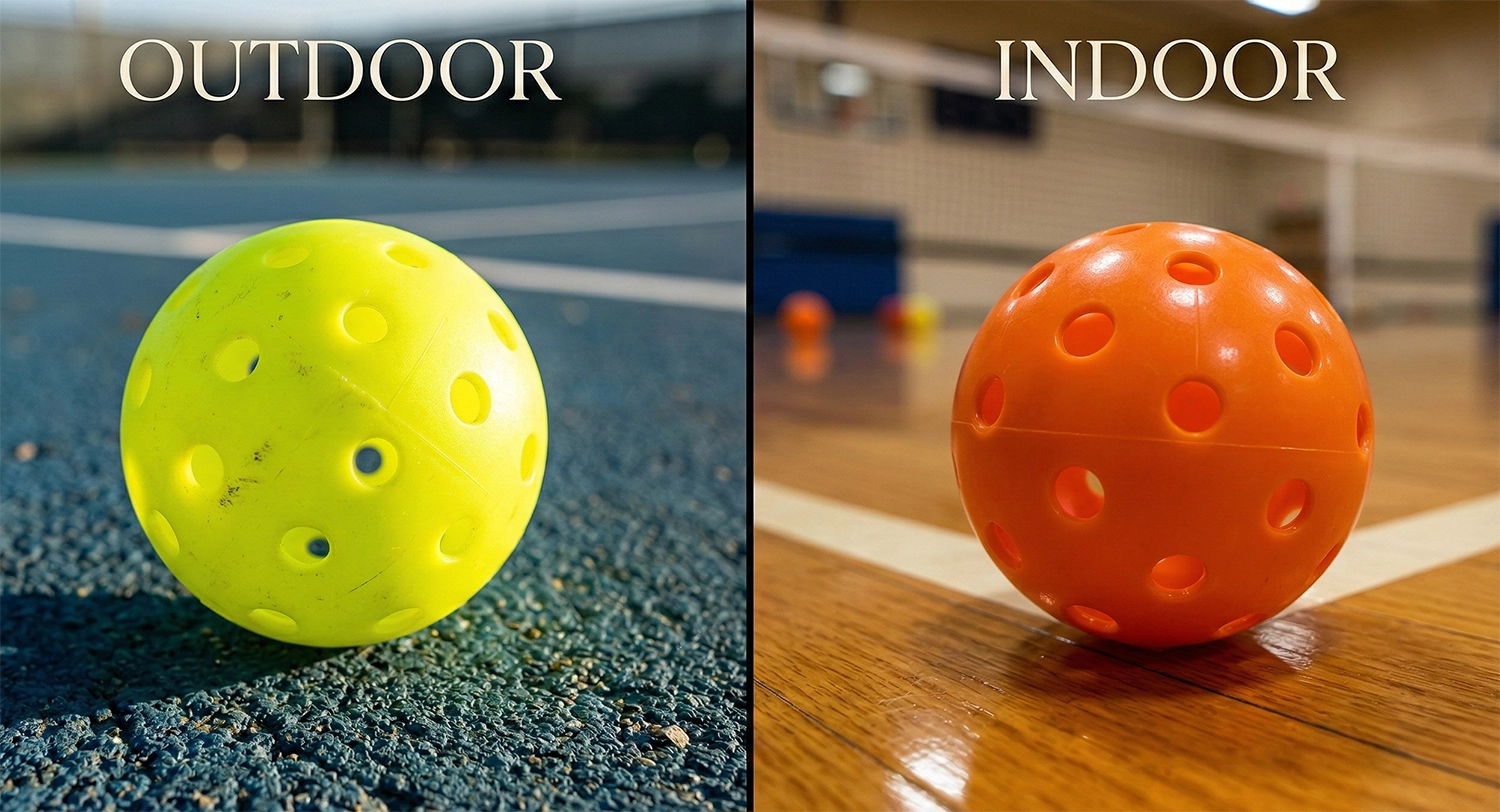
A ball is not just a ball. Use an outdoor ball on an indoor gym floor and it will skip like you are playing on ice. Use an indoor ball outside on a windy day and you will have zero control over your shots.
You need the right ball for your specific court. Below are the only 3 pickleball balls you need to know about in 2026.
Best Pickleball Balls 2026 — Compared
| Ball | Type | Holes | Score | Price |
|---|---|---|---|---|
| Franklin X-40🏆 Outdoor | Outdoor | 40 | 9.5 | ~$15/6pk |
| Selkirk Pro S1💪 Premium | Outdoor / All | 38 | 9.2 | ~$20/6pk |
| Franklin X-26💰 Indoor | Indoor | 26 | 9.0 | ~$12/6pk |
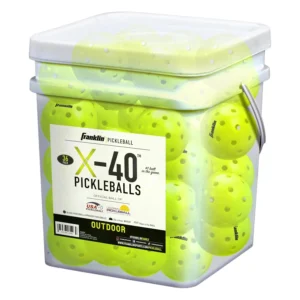
The Franklin X-40 is the official ball of major professional pickleball tournaments — used at APP Tour and PPA Tour events worldwide.
Its 40-hole design and harder plastic construction makes it perfectly engineered for outdoor courts. The ball cuts through wind cleanly and bounces predictably on rough asphalt or concrete surfaces.
If you play outdoors, this is the only ball you need. Durable, consistent, and USAPA approved.
- ✅ Official tournament ball — APP & PPA Tour approved
- ✅ 40-hole design — cuts through wind cleanly
- ✅ Consistent bounce on rough outdoor surfaces
- ✅ Excellent durability — lasts many sessions
- ✅ USAPA approved for all sanctioned play
- ❌ Not suitable for indoor gym floors
- ❌ Harder feel — less forgiving on mishits
- ❌ Cracks in extreme cold below 40°F
The Franklin X-40 is the gold standard for outdoor pickleball. If you play on concrete or asphalt, this is the only ball you need.
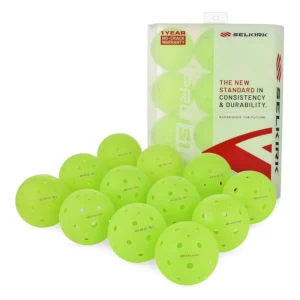
Generic balls shatter in cold weather. The Selkirk Pro S1 is specifically engineered with crack-resistant plastic to survive temperature extremes.
With 38 precision-drilled holes, it offers a slightly different flight path than the X-40 — more controlled and predictable in variable conditions. Trusted by Selkirk pro players.
If you play year-round in cold climates, or simply want the most durable ball available, the Pro S1 is worth every extra penny.
- ✅ Crack-resistant plastic — survives cold weather
- ✅ Trusted Selkirk brand — pro player endorsed
- ✅ 38-hole precision drilling — predictable flight
- ✅ USAPA approved — tournament legal
- ✅ Excellent for year-round outdoor play
- ❌ Slightly higher price per ball
- ❌ 38 holes vs 40 — different flight feel
- ❌ Less common in recreational play
If you play in cold climates or want the most durable outdoor ball available, the Selkirk Pro S1 is the premium choice that will not let you down.
Indoor courts require a completely different ball. The Franklin X-26 features 26 larger holes and softer plastic — specifically engineered for smooth gym floors.
The softer construction gives you more control on hardwood and the larger holes reduce the impact of indoor air conditioning on ball flight.
Using an outdoor ball indoors will skip erratically on smooth floors. The X-26 eliminates that problem completely.
- ✅ 26 large holes — designed for smooth indoor floors
- ✅ Softer plastic — better control indoors
- ✅ Consistent bounce on gym hardwood
- ✅ USAPA approved
- ✅ Best price per ball on this list
- ❌ Indoor only — do not use outdoors
- ❌ Softer feel — less suitable for power players
- ❌ Less durable than outdoor balls
If you play on indoor gym courts, the Franklin X-26 is the correct tool for the job. Using any other ball on a smooth floor will give you inconsistent, unpredictable bounces.
Which of These Pickleball Balls Is Right for You?
Stop overthinking. Match your ball to your court and you are done.
✓ You want the official tournament standard ball
✓ You play in mild to warm weather (above 40°F)
✓ Durability and consistency are your priorities
✓ You want the most widely used outdoor ball
→ Check Price on Amazon
✓ You want the most crack-resistant ball available
✓ You are a serious player who wants premium quality
✓ You prefer a trusted brand name in your equipment
✓ Durability in extreme conditions is non-negotiable
→ Check Price on Amazon
✓ You want smooth, consistent bounces on hardwood
✓ You play at a recreation center or YMCA
✓ You want the best value indoor ball
✓ Control on smooth surfaces is your priority
→ Check Price on Amazon
Outdoor vs Indoor Pickleball Balls — What You Need to Know
Verified by USA Pickleball — all balls on this list meet official standards for recreational and tournament play.
| ⛳ Outdoor Balls (40 holes) | Harder plastic, smaller holes. Designed for rough concrete/asphalt. Wind-resistant. Cracks faster in extreme cold. |
| 🏛️ Indoor Balls (26 holes) | Softer plastic, larger holes. Designed for smooth gym floors. Better control indoors. Not suitable for outdoor use. |
| 🌡️ Cold Weather Choice | Below 50°F, most standard balls become brittle and crack. The Selkirk Pro S1 crack-resistant formula is the solution. |
| 🔄 Buy Both Types | Most serious players keep 6-12 outdoor balls and 6+ indoor balls. Courts wear them out faster than you think. |
Pickleball Ball FAQ 2026
Outdoor balls have 40 smaller holes and harder plastic — engineered for rough surfaces and wind resistance.
Indoor balls have 26 larger holes and softer plastic — designed for smooth gym floors with consistent, controlled bounces. Using the wrong ball on the wrong surface gives unpredictable results.
Outdoor balls typically last 3-10 sessions of regular play before cracking or going soft.
Indoor balls last longer because smooth floors are less abrasive. Cold weather dramatically reduces ball life — always store balls at room temperature.
Not always — tournament directors specify the official ball for each event.
The Franklin X-40 is used at most professional outdoor events. Always check the specific tournament rules before bringing your own balls.
