
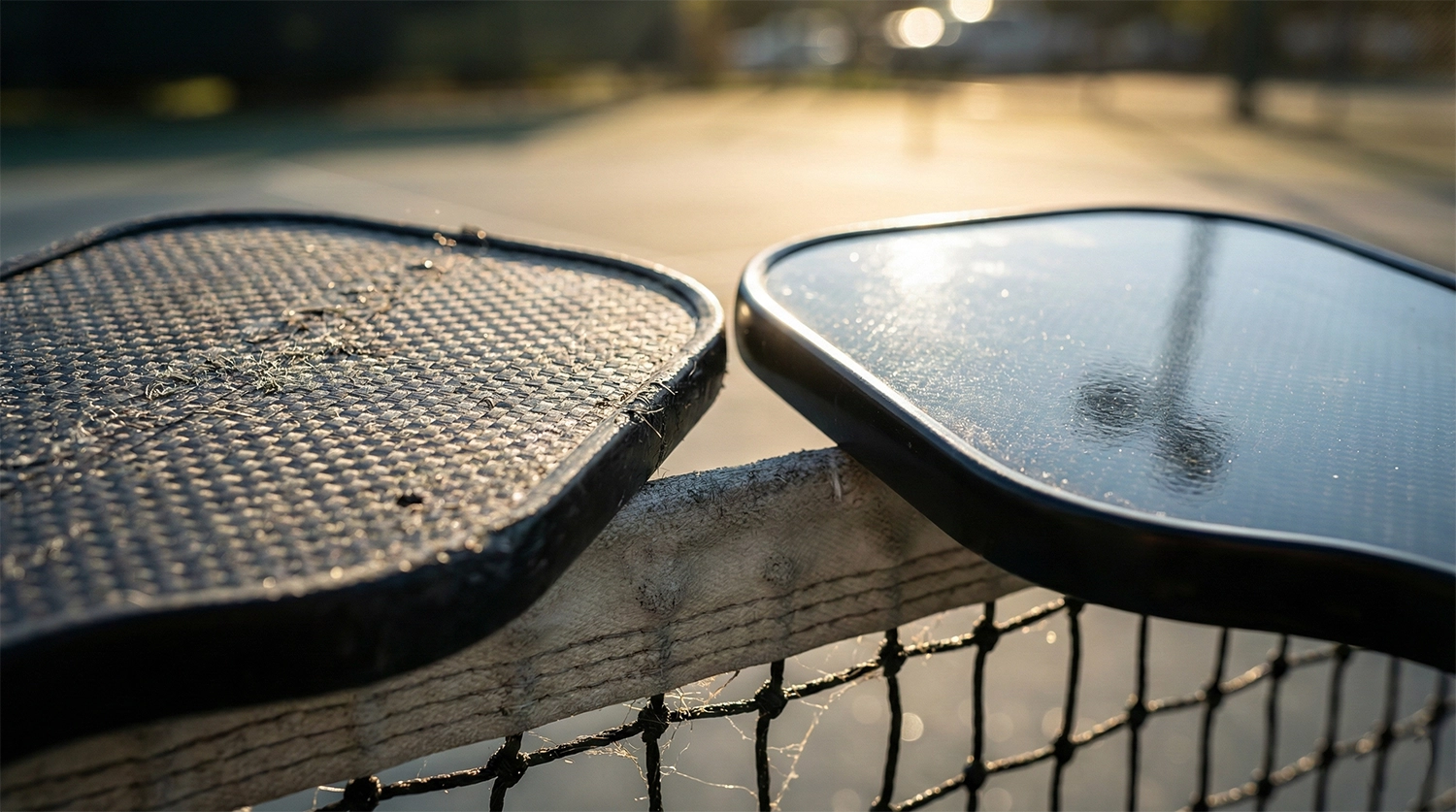
Carbon Fiber vs. Fiberglass Pickleball Paddles: Which One Actually Wins?
Let’s cut to the chase: the surface material of your paddle determines whether you’re crushing third-shot drives or finessing dinks at the kitchen line. Carbon fiber and fiberglass are the two heavyweights in the paddle world, and they play completely different games.
If you’ve been staring at paddles online wondering why some cost $80 and others $200, the answer usually starts with the face material. Fiberglass paddles deliver raw power and pop. Carbon fiber paddles give you surgical control and wicked spin. But which one fits your game?
This guide breaks down the real differences so you can stop second-guessing, pick the right weapon, and start dominating the court.
What Is a Fiberglass Pickleball Paddle?
Fiberglass paddles are built by weaving thin glass strands into fabric, then bonding them with resin to create a slightly flexible surface. That flex is the secret sauce. When the ball hits a fiberglass face, the material bends just enough to store energy—then releases it fast, launching the ball back with serious pop.
Pros of Fiberglass Paddles
- Massive Power: Fiberglass has more flex than carbon fiber, absorbing and releasing energy quickly on contact. Translation? You get effortless power on drives and attacks without swinging like you’re playing tennis.
- Great “Pop”: The ball jumps off the paddle face. If you’re building your swing mechanics, fiberglass gives you the satisfying feel of hitting hard shots with less effort.
- Budget-Friendly: Easier to manufacture, these paddles typically fall in the $70–$150 range. A huge win if you’re upgrading from a cheap wooden starter paddle.
Cons of Fiberglass Paddles
- Less Control: The same flex that creates power makes precision harder. Soft dinks and resets require a lighter touch, and fiberglass doesn’t give you fine-tuned feedback.
- Wears Out Faster: The textured surface that helps with spin can wear down. If you play 3+ times a week, expect the paddle to lose some “bite” over a few months.
Who Should Use Fiberglass?
Perfect for beginners and power players who want to hit hard without perfect technique. If you love aggressive baseline drives, fiberglass gives you instant gratification.
What Is a Carbon Fiber Pickleball Paddle?
Carbon fiber paddles are made from tightly woven carbon strands bonded with resin, creating an extremely stiff and lightweight surface. Unlike fiberglass, carbon fiber doesn’t flex much on impact. The ball stays on the paddle face a fraction of a second longer, giving you more time to shape your shots.
For approved paddle materials, check the official list at [USA Pickleball]
Pros of Carbon Fiber Paddles
- Unmatched Control: The stiffer surface absorbs less energy, meaning you dictate exactly how much power goes into each shot. Dropping dinks with precision becomes much easier.
- Massive Spin Potential: The rougher texture allows the paddle to “grab” the ball like velcro. If you rely on topspin drives or disguised serves, carbon fiber gives you maximum RPMs.
- Highly Durable: Carbon fiber resists wear and maintains its performance. You won’t see the same texture degradation over months of heavy use.
Cons of Carbon Fiber Paddles
- Less Pop: Because it’s stiffer, you won’t get automatic power. You need solid body mechanics to generate pace, which can frustrate newer players.
- Higher Price Point: Premium materials push these paddles into the $130–$250+ range. An investment for serious players.
Who Should Use Carbon Fiber?
Built for advanced players and control-focused strategists who thrive at the kitchen line. If you value placement over raw power, this is your paddle.
Carbon Fiber vs Fiberglass Pickleball Paddle: Direct Comparison
When comparing the carbon fiber vs fiberglass pickleball paddle debate, four factors matter most: power, control, spin, and price.
Here is exactly how the two materials stack up head-to-head on the factors that actually matter on the court:
- Power: Fiberglass wins. The flexible surface gives you more rebound and pop with less effort. Carbon fiber forces you to generate your own pace.
- Control & Spin: Carbon fiber dominates. The stiffer surface gives precise feedback, and the texture grabs the ball. Fiberglass flex makes it harder to fine-tune placement.
- Sweet Spot Size: Fiberglass is more forgiving. Off-center hits still feel decent. Carbon fiber’s sweet spot is smaller but highly responsive when you nail it.
- Price: Fiberglass is cheaper ($70–$150). Carbon fiber is an investment ($130–$250+).
Final Verdict: Which Should You Choose?
The carbon fiber vs fiberglass pickleball paddle question has a clear answer — it depends entirely on your playing style.
Stop overthinking it. Let’s be real: neither material is inherently “better.” Fiberglass buys you power. Carbon fiber buys you control.
Choose Fiberglass if:
- You want easy power without perfect technique.
- You’re a beginner or intermediate still developing your game.
- You love aggressive baseline hard drives.
- You’re on a strict budget.
Choose Carbon Fiber if:
- You prioritize precision and placement over raw power.
- You’re an advanced player who dominates at the kitchen line.
- You want maximum spin and shot-shaping ability.
- You view your paddle as a long-term investment.
Ready to upgrade your gear and step onto the court with confidence? 👉 Check out our brutally honest guide to the [BEST PICKLEBALL PADDLES IN 2026] to find the exact model that fits your playing style and budget.
Choosing between a carbon fiber vs fiberglass pickleball paddle is the most important equipment decision you will make as your game grows.
