
Pickleball Terminology: The Ultimate Glossary of Slang & Terms
Mastering pickleball terminology is the fastest way to feel confident on the court from day one.
You’ve got the paddle. You’ve got the comfortable shoes. You’ve even found a local court within five miles of your house. You feel ready to play, right?
But then you step onto the court, and suddenly, everyone is speaking a different language.
Someone yells, “Stay out of the kitchen!” Another player celebrates a “Nasty Nelson.” And you’re left standing there wondering if you accidentally joined a cooking class or a wrestling match instead of a friendly game of pickleball.
Don’t worry—you aren’t alone. Pickleball has a quirky, unique vocabulary that can be totally baffling for beginners. It’s a mix of tennis terms, badminton rules, and some downright weird slang that seems to have appeared out of nowhere.
If you want to feel confident on the court, you need to talk the talk. We aren’t just going to give you dry dictionary definitions here. We are going to decode the secret language of pickleball so you can stop scratching your head and start playing with confidence.
Here is everything you need to know, from the essential rules to the slang that makes you sound like a pro.
The Essentials (Terms You MUST Know)
This pickleball terminology guide starts with the terms that directly affect the rules and scoring.
Before we get to the fun slang, we need to cover the basics. These are the terms that affect the rules, the scoring, and the fundamental strategy of the game. If you don’t know these, you might lose a point without even realizing why.
The Kitchen (Non-Volley Zone)
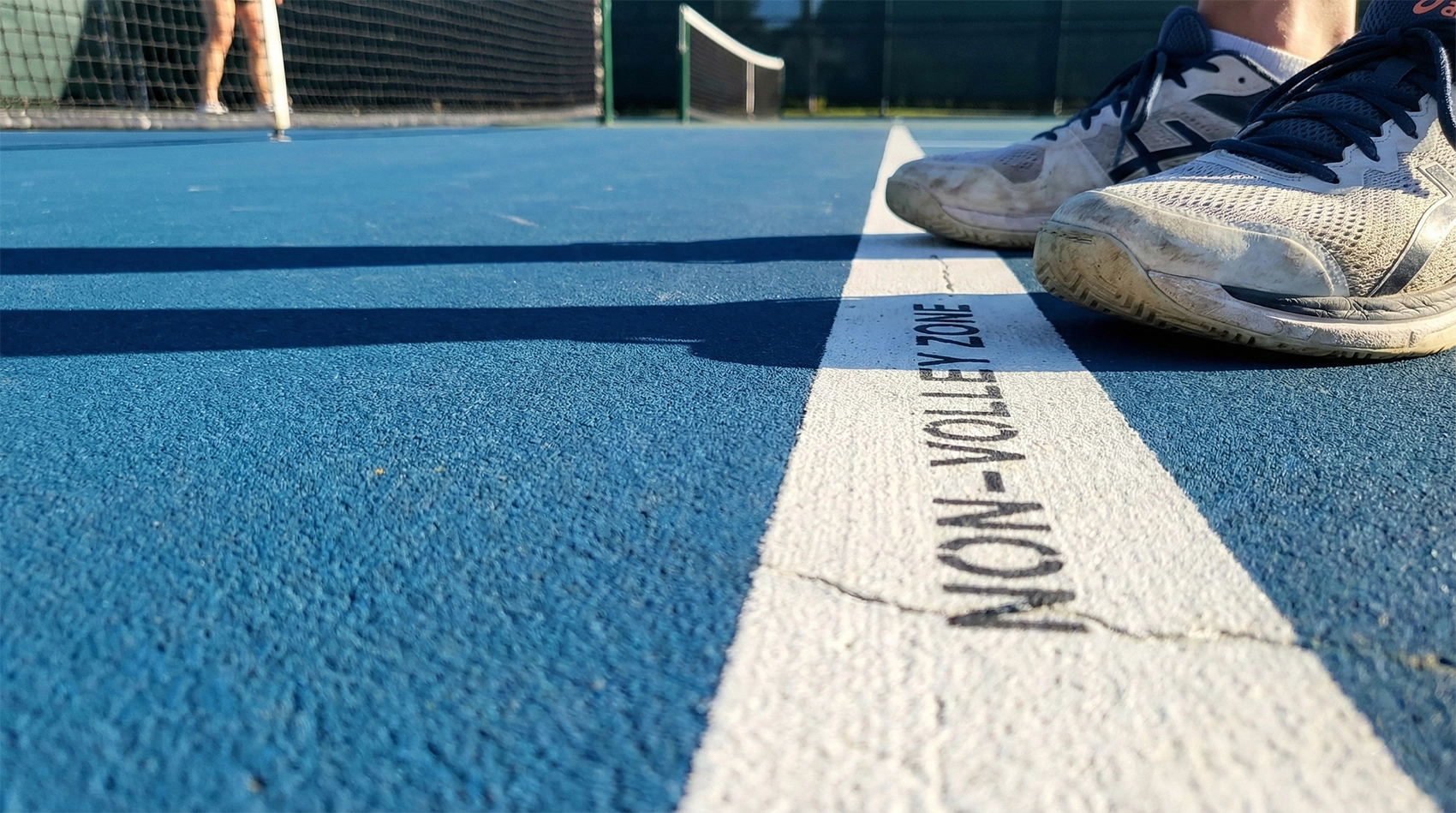
The “Kitchen” isn’t just a funny name; it’s the most strategic 7 feet on the court. Officially known as the Non-Volley Zone (NVZ), this is the area stretching 7 feet from the net on both sides.
Here is the golden rule: You can step inside it anytime you want, but you absolutely cannot volley (hit the ball out of the air) while standing there. If your toe even touches the Kitchen line while you hit a volley, it’s a fault, and you lose the point.
Dink
If you come from a tennis background, this shot might feel counterintuitive. You are used to smashing the ball, right? In pickleball, power isn’t always the answer.
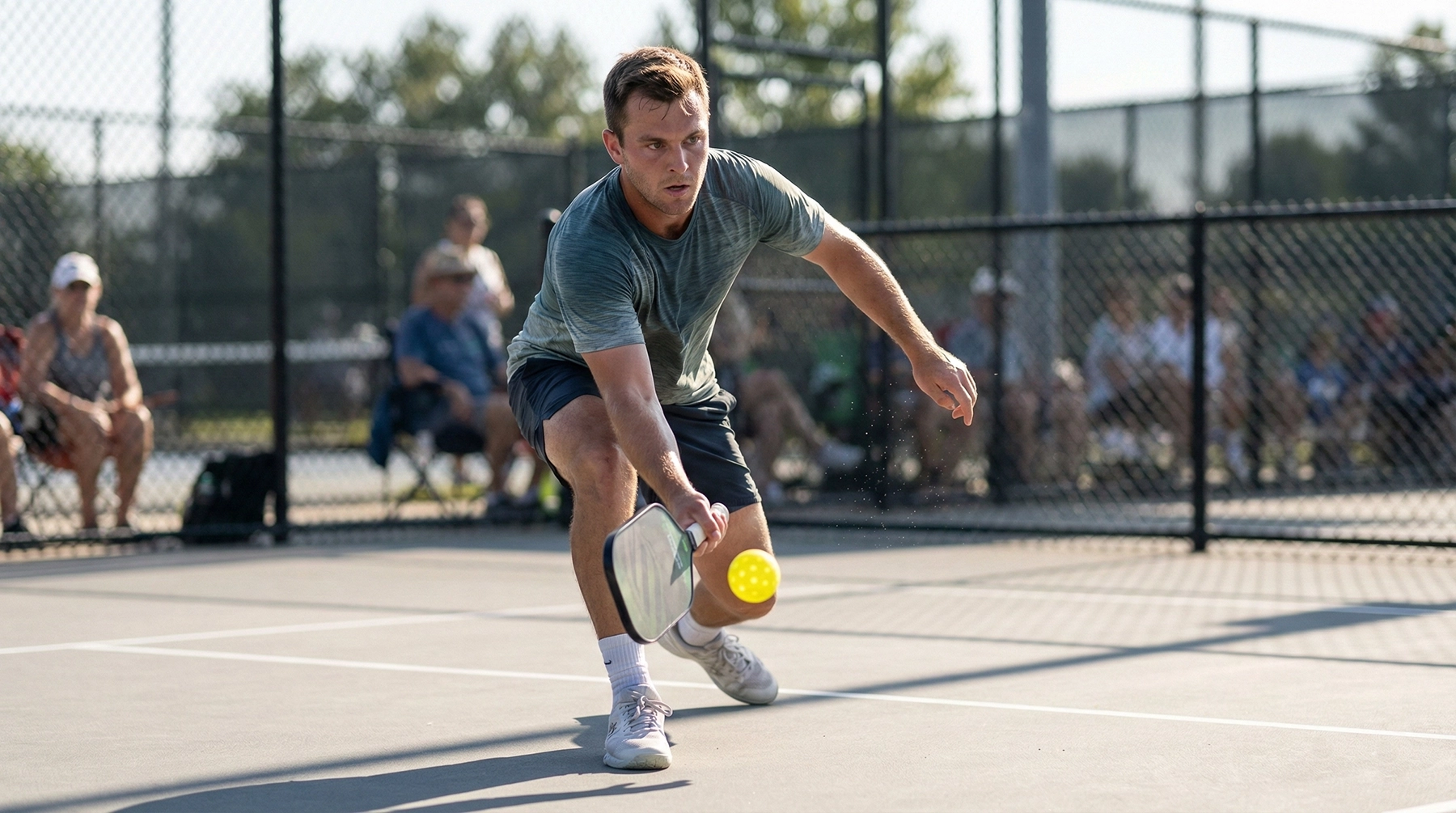
A dink is a soft, controlled shot that arcs over the net and lands harmlessly in your opponent’s Kitchen. The goal isn’t to hit a winner; it’s to force your opponent to hit the ball up. It’s a game of patience. You dink, they dink, you dink… until someone makes a mistake.
Volley
This one is simple but crucial. A volley is hitting the ball out of the air before it bounces on the ground. Most of your game should be spent trying to get to the Kitchen line so you can volley. If you are stuck at the back of the court letting everything bounce, you are playing defense. Get up there and volley!
Side Out
Pickleball scoring can be confusing (we know, saying “4-3-2” sounds like a math problem), but “Side Out” is a key concept to grasp.
A Side Out happens when the serving team loses the rally. In doubles play, each player on a team usually gets a chance to serve. Once both players have lost their serve, a “Side Out” is called, and the serve moves to the other team.
[Confusion Alert: Struggling with the numbers? Read our simple guide: Pickleball Scoring Explained]
Ace
An ace is a serve that is so good, the receiver doesn’t even touch it. Let’s be real: hitting an ace in pickleball is harder than in tennis because you are serving underhand. But it happens!
For the complete official rules and terminology, visit [USA Pickleball]
The Fun Slang (Sound Like a Pro)
Now that we covered the rules, let’s dive into the fun side of pickleball terminology – the slang. Using these terms correctly will make you fit right in at your local open play session.
Banger: We all know a banger. Usually, this is a former tennis player who steps onto the pickleball court and tries to hit every single ball as hard as humanly possible. They don’t want to dink; they want to drive the ball through you.
Pickled: This is the term you never want applied to you. Getting pickled means losing a game 11-0. It is the ultimate shame. If you get pickled, you might owe your partner a drink!
Nasty Nelson: A controversial, hilarious shot where the server intentionally hits the receiver’s partner (who is standing near the Kitchen) with the ball. It counts as a point for the server!
Erne: An advanced shot where a player jumps over the corner of the Kitchen (out of bounds) to smash the ball mid-air.
Bert: If the Erne had a crazy brother, it would be Bert. It’s essentially an Erne, but performed by your partner jumping in front of you.
Why is it Called “Pickleball”? (The History)
This is the most common question new players ask. Why “pickle”? Does it involve actual pickles? The history of the name is actually a subject of great debate, and there are two main stories.
The year was 1965. The place was Bainbridge Island, Washington. Three dads—Joel Pritchard, Bill Bell, and Barney McCallum—invented the game to entertain their bored kids.
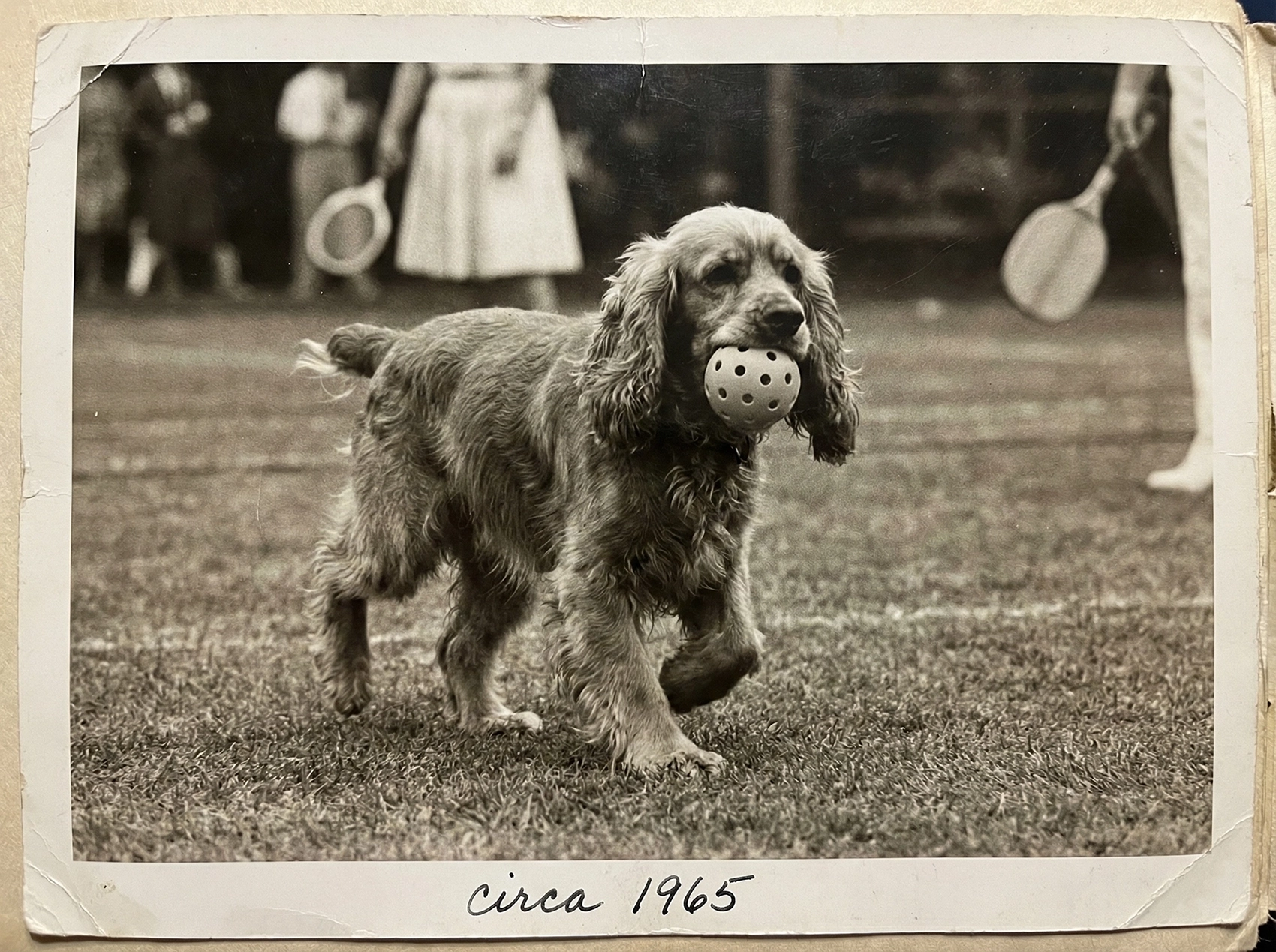
“Did the dog name the game, or did the game name the dog?”
The Dog Myth
For years, people believed the game was named after the Pritchard family dog, a cocker spaniel named Pickles. The story went that the dog would chase the ball and run off with it. “Pickles’ ball” became “Pickleball.” It’s a cute story, but sadly, it’s not true. Pickles the dog didn’t join the family until 1967—two years after the game was named!
The Rowing Truth
The real story comes from Joel Pritchard’s wife, Joan, a competitive rower. In rowing, a “pickle boat” is a boat manned by leftover oarsmen who weren’t selected for the top crews. It’s a mishmash crew. Since pickleball was a mishmash of tennis, badminton, and ping pong, she called it “Pickleball.”
Pickleball Terminology: Now You Speak the Language
You are now fluent in pickleball terminology – kitchen, dink, banger, and everything in between. A great player needs a great paddle. Don’t buy a cheap wooden one!
[Check out our guide: Best Pickleball Paddles for Beginners & Pros]