
Pickleball 101 Beginners Guide — Step 1: Master the Rules & Scoring
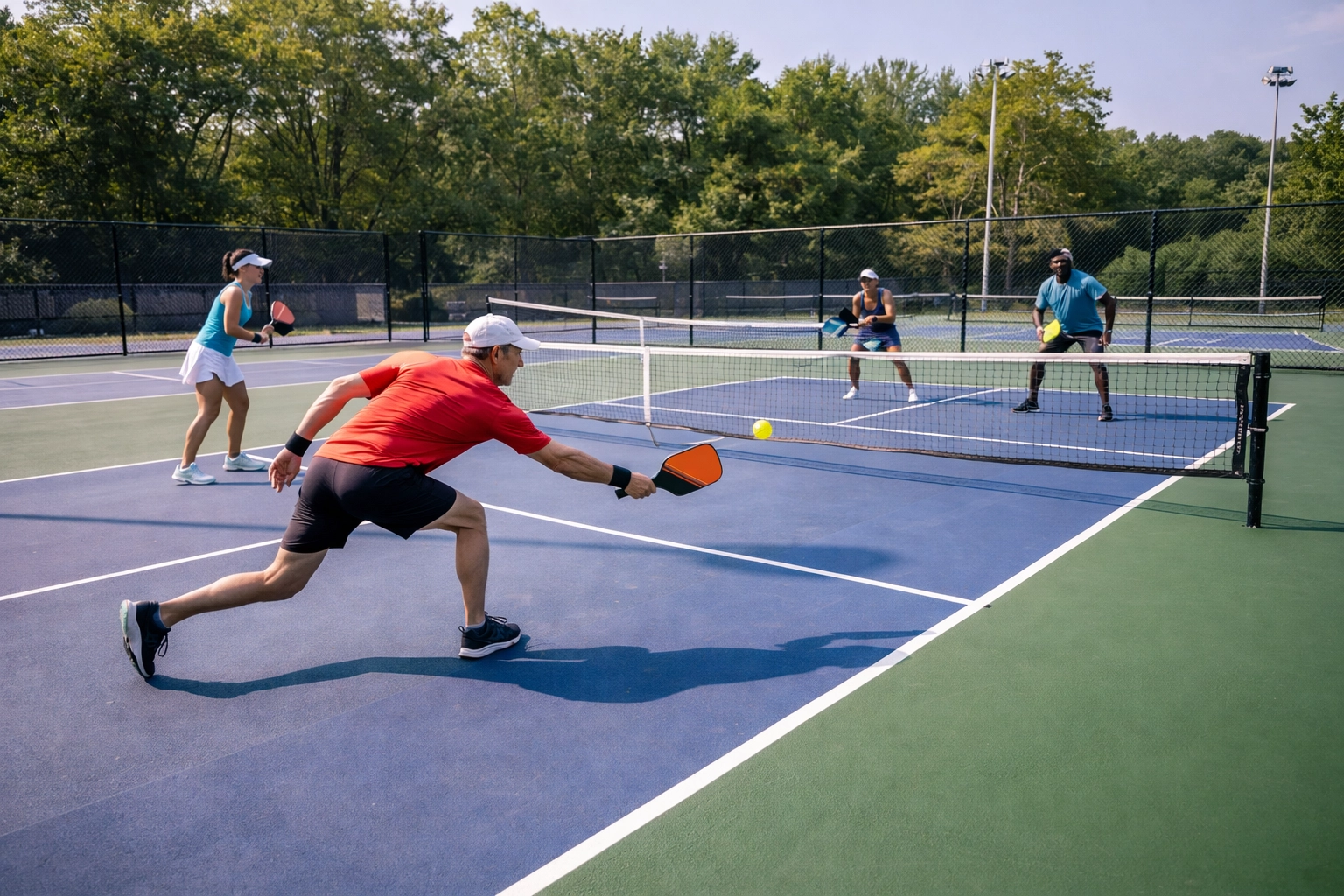
You’ve heard the distinct pop-pop-pop coming from the local tennis courts. You’ve seen your neighbors walking around with paddle covers slung over their shoulders. Maybe your coworker won’t stop talking about how they “got pickled” last weekend.
This pickleball 101 beginners guide is exactly what you need. Welcome to the world of pickleball.
It’s not just a trend; it’s a full-blown movement. Whether you are looking for a low-impact way to break a sweat, a social outlet to meet new people, or just a reason to get out of the house, you have come to the right place.
The best part? You don’t need to be an elite athlete to start. If you can swing a paddle and have a laugh, you are ready to play. This pickleball 101 beginners guide is your “Start Here” roadmap to understanding why everyone is obsessed, what gear you actually need, and how to step onto the court without looking like a total rookie.
Welcome to the Fastest-Growing Sport in America
If it feels like pickleball is taking over the world, that’s because the numbers say it is.
According to the Sports & Fitness Industry Association (SFIA), pickleball has been the fastest-growing sport in America for three years running. In 2023 alone, participation grew by a massive 51.8%, reaching 13.6 million players. Over the last three years? The sport has exploded by 223.5%.
Why the obsession?
It’s the Great Equalizer: Unlike tennis, which can take months of lessons just to keep a rally going, you can learn the basics of pickleball in about 15 minutes. We see grandparents playing competitive matches against their teenage grandkids.
It’s Incredibly Social: The court is smaller (about a quarter the size of a tennis court), which means you are physically closer to your opponents and partner. It’s hard not to make friends when you’re that close.
It Fits Your Life: Whether you want a relaxed Saturday morning hit or a competitive league night, pickleball scales to your energy level.
You can learn the basics in an afternoon, but be warned: you might spend a lifetime mastering the strategy.
Pickleball 101 Beginners Guide – Step 1: Master the Rules & Scoring
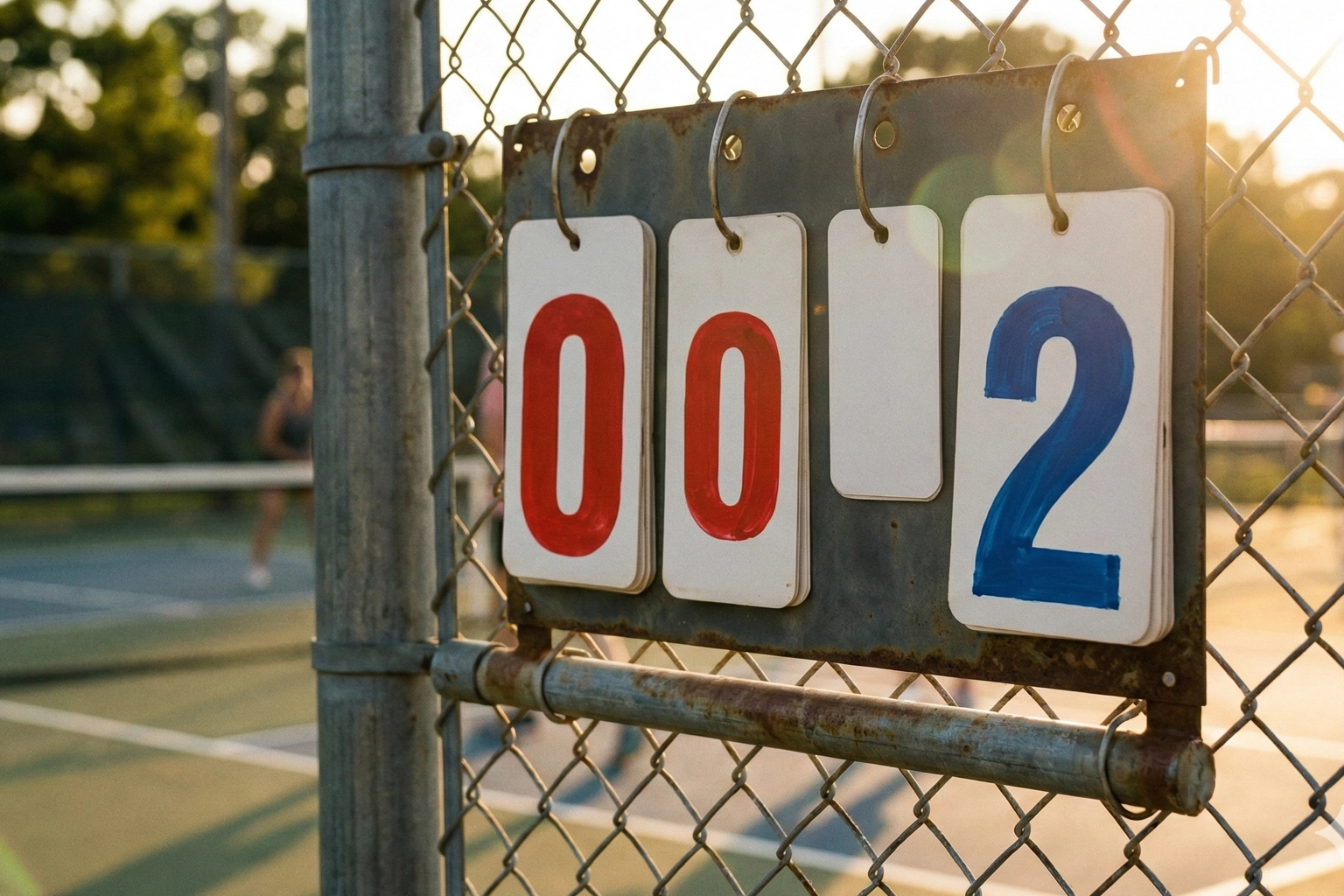
Let’s be real: The first time you hear someone shout “0-0-2!” before a serve, it sounds like they are launching a nuclear code. Don’t panic. The rules are designed to keep the game fair and fun. Beginners only need to focus on three main concepts to get a game going.
The Two-Bounce Rule
When you serve the ball, the returning team must let it bounce before hitting it back. Here is the catch: The serving team also has to let the return bounce before hitting it. Serve (bounce), Return (bounce), then anything goes. This prevents the serving team from rushing the net and smashing the ball immediately.
The Kitchen (Non-Volley Zone)
The “Kitchen” is the most strategic 7 feet on the court. Here is the golden rule: You can step inside it anytime you want, but you absolutely cannot volley (hit the ball out of the air) while standing there. If your toe is on the line when you smash a volley? Fault.
Scoring Basics
Pickleball uses side-out scoring. You can only score a point when your team is serving. Games are typically played to 11 points, and you must win by 2. The score is called out as three numbers: Serving team score – Opposing team score – Server number (1 or 2).
[Master the Rules & Scoring Here]
For the complete official rulebook, visit USA Pickleball
Pickleball 101 Beginners Guide – Step 2: Get the Right Gear
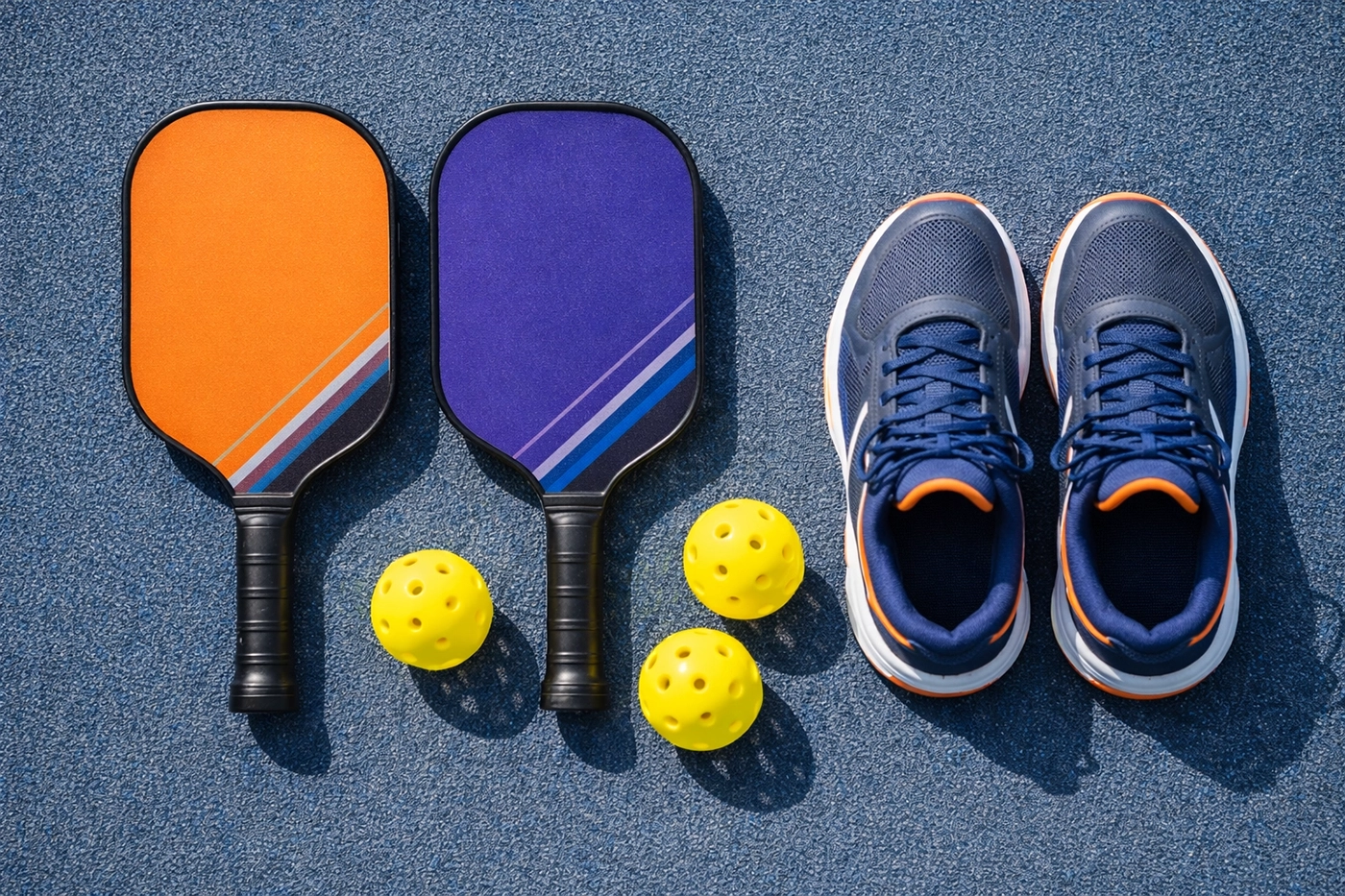
One of the best things about pickleball is the low barrier to entry. You don’t need helmets, pads, or thousands of dollars in equipment. However, making the wrong choice on one specific item can lead to injury.
The Paddle
Beginners can easily find a reliable starter paddle for under $50. Avoid the heavy wooden paddles often found in rental bins — they are heavy and a one-way ticket to tennis elbow. Look for a “honeycomb core” paddle made of graphite or composite. It’s lighter, quieter, and gives you way more control.
The Ball
Pickleballs are plastic with holes, similar to wiffle balls. There are indoor balls (softer, larger holes) and outdoor balls (harder, smaller holes). If you are playing outside, make sure you grab outdoor balls — they are designed to withstand wind and rougher court texture.
The Shoes — Do NOT Skip This
Do not play pickleball in running shoes. Running shoes are designed for forward motion. Pickleball is a sport of lateral (side-to-side) movement. If you wear running shoes, you risk rolling your ankle on a quick cut. You need Court Shoes (tennis or volleyball shoes). They are flat, stable, and have reinforced sides to keep your foot locked in place.
[See Our Essential Gear Guide]
Step 3: Learn the Lingo (Don’t Be a “Banger”)
Walk onto a court and you might think people are speaking a foreign language. Knowing a few key terms will help you blend in immediately.
Dink: A soft shot hit from the Kitchen line that arcs just over the net and lands in your opponent’s Kitchen.
Banger: A player who hits every ball hard. (Don’t be a banger; learn the soft game!)
Kitchen: The 7-foot non-volley zone near the net.
Pickled: Losing a game 11-0. It happens to the best of us.
Bert: An advanced shot where you jump over the Kitchen corner to hit a volley.
[Read the Full Terminology Guide]
You’ve Completed Your Pickleball 101 Beginners Guide
This pickleball 101 beginners guide has covered everything you need — rules, gear, and lingo — in one place.
The only thing left to do is find a court. Most local parks and recreation centers have drop-in hours specifically for beginners. Don’t be afraid to show up alone; the community is famous for being welcoming. Just walk up to a group, smile, and say: “I’m new, is there a beginner rotation?”
Remember the three words from this pickleball 101 beginners guide: show up, swing, and laugh. See you on the court.