
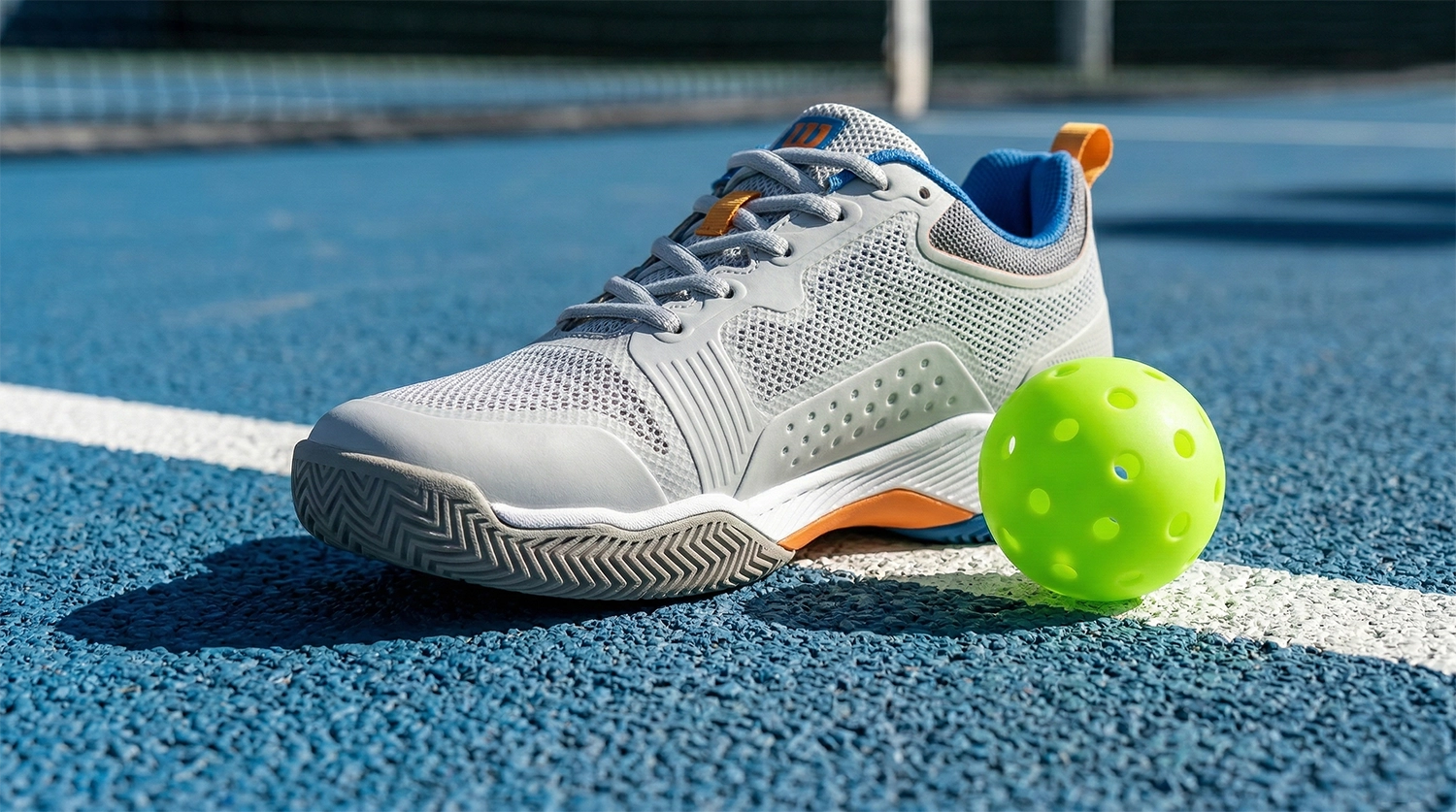
The 3 Best Pickleball Shoes for Wide Feet in 2026: Stop Squeezing Your Toes
Introduction Let me be brutally honest: squeezing wide feet into narrow pickleball shoes is a recipe for disaster.
You are not just risking temporary blisters. You are actively setting yourself up for bunions, plantar fasciitis, and chronic foot pain that will wreck your game. And here is the worst part—most players with wide feet make the exact same terrible mistake: they buy shoes a size too big, thinking extra length equals extra width.
Wrong.
When you size up, your heel slips. When your heel slips during a lateral lunge, your ankle rolls. According to podiatrists, a shoe that is too long puts your ligaments at extreme risk during the quick side-to-side movements that define pickleball. (If you still don’t understand why lateral stability is non-negotiable, read our complete breakdown in the [Essential Pickleball Gear Checklist for Beginners]).
You need shoes built on a true wide last, not just a standard shoe that is slightly stretched. This guide breaks down the three best pickleball shoes for wide feet in 2026, backed by real specs and medical logic. No generic recommendations. Just footwear that actually fits.
The Quick Comparison: Top 3 Wide Court Shoes
Stop Squeezing Your Toes: The 3 Best Pickleball Shoes for Wide Feet (2026)
Sizing up your shoes to get more width is a guaranteed way to roll your ankle. Whether you need a roomy toe box for bunions or a massive 4E/6E last, here are the only three court shoes that actually fit.
Detailed Reviews: The Top 3 Wide Pickleball Shoes
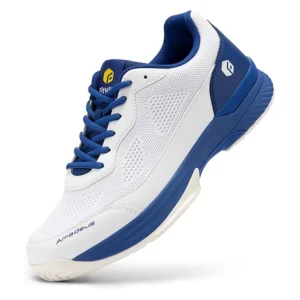
1. FitVille Pickleball Sneakers: Best for Extreme Wide Feet (4E/6E)
If you have genuinely massive feet, severe bunions, or if every “wide” shoe you’ve ever tried still feels like a medieval torture device, FitVille is your only answer.
What Makes It Stand Out: Mainstream brands usually stop at ‘2E’ width. FitVille doesn’t mess around—they engineer their shoes up to 4E and 6E widths. They build their shoes on a true wide last, meaning the entire footbed platform is wider, not just the toe area.
Beyond the massive width, they feature an anatomical ArchCore insole with a built-in heel cup, and a TPU heel ring that stabilizes your gait and prevents pronation. (If you are a heavier player who needs maximum shock absorption along with extreme width, compare this with our top heavy-duty picks in the [Best Men’s Pickleball Shoes of 2026]).
- Pros: True wide last (available in 4E and 6E), incredible relief for severe bunions, strong arch support for flat feet.
- Cons: They are noticeably heavier and bulkier than standard performance court shoes.
- Bottom Line: If your feet are so wide that standard brands fail you, FitVille solves the problem. Stop cramming your feet into narrow shoes and get something built for your anatomy. [Check Current Price on Amazon]
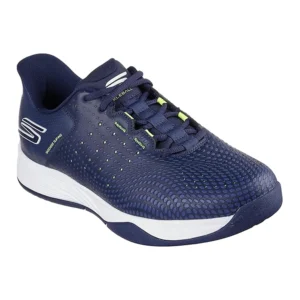
2. Skechers Viper Court Reload: Best for Comfort & Convenience
The Skechers Viper Court Reload is a dream for players who want a roomy, comfortable fit without the hassle of lacing up tight performance shoes.
What Makes It Stand Out: This shoe features Skechers’ famous Relaxed Fit® design. This means it provides extra volume at the toe and forefoot, allowing your toes to splay naturally, while maintaining a standard, secure fit at the heel to prevent slipping.
The absolute game-changer is the hands-free Slip-ins® technology. The heel acts like a built-in shoehorn, allowing you to step into the shoe without bending down or fumbling with laces—making it perfect for older players or anyone with back mobility issues. It also carries the APMA Seal of Acceptance for foot health. (Looking for similar podiatrist-approved comfort but in standard sizes? Check our guide to the [Best Women’s Pickleball Shoes]).
- Pros: Hands-free slip-on design, APMA-approved for foot health, Goodyear rubber outsole for elite grip, machine washable.
- Cons: It doesn’t come in formal 4E widths; it just has a naturally roomy forefoot. The slip-on design offers slightly less aggressive ankle lockdown than traditional laces.
- Bottom Line: If you want a wide toe box, excellent arch support, and the sheer convenience of hands-free entry, the Skechers Reload is the most comfortable shoe on the market. [Check Current Price on Amazon]
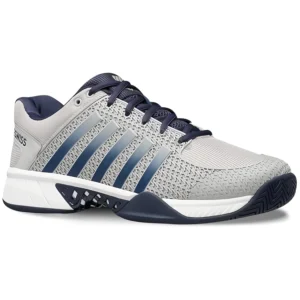
3. K-Swiss Express Light: Best Performance Court Shoe
The K-Swiss Express Light is for players who have wide feet but absolutely refuse to sacrifice high-level athletic performance.
What Makes It Stand Out: This shoe hits the ultimate sweet spot. It offers a naturally wide toe box (allowing natural toe spread) while keeping the heel relatively snug (preventing the sloppy heel-slip you get from sizing up).
More importantly, it features a 180-degree Plantar Support Chassis. This rigid plastic shank under the midfoot prevents the shoe from twisting when you make violent, explosive lateral cuts. It gives wide-footed players the locked-in, aggressive stability usually reserved for narrow-footed pros.
- Pros: Excellent lateral stability for aggressive play, durable Durawrap upper protects against toe drag, modified herringbone tread for superior court grip.
- Cons: The heel is slightly narrow to keep you locked in, which may require a short break-in period.
- Bottom Line: The K-Swiss Express Light is the elite performance pick. It delivers the best of both worlds: natural toe room and locked-in lateral control for tournament-level play. [Check Current Price on Amazon]
Buying Guide: The Truth About Wide Court Shoes
Why “Sizing Up” is Dangerous Shoe length and shoe width are not the same thing. When you buy a size 11 instead of a 10 just to get more width, you get extra space at the toes—but you also get a loose heel. During the explosive lateral lunges of pickleball, a loose heel means your foot slides inside the shoe, acting as a lever to violently roll your ankle. Never size up for width.
Wide Toe Box vs. True Wide Last Not all “wide” shoes are created equal.
- Wide Toe Box (Like K-Swiss): The area from the ball of your foot to your toes is spacious, allowing your toes to splay. The rest of the shoe (midfoot and heel) remains standard width. Great for players with bunions but normal heels.
- Wide Last (Like FitVille): The entire physical footbed of the shoe is wider from heel to toe. This is measured in specific width ratings (2E, 4E, 6E). Essential for players with genuinely massive feet.
Frequently Asked Questions
Do I need a wide shoe if I only have bunions? Yes. Bunions are often caused or severely worsened by tight, narrow shoes that force your big toe inward. A wide toe box gives your toes room to spread naturally, immediately reducing pressure on the bunion and preventing further deformity.
How do I know if my shoes are too narrow? Your feet will tell you. If you experience numbness in your toes, if you develop blisters on the outside of your pinky toe, or if you have deep red indentations on your foot after removing your shoes—they are too narrow.
What is the difference between 2E and 4E width?
- 2E (Wide): Adds approximately 1/4 inch of width across the ball of the foot compared to a standard (D) width.
- 4E (Extra Wide): Adds approximately 1/2 inch of width compared to a standard (D) width. If “wide” shoes still hurt, you need 4E.
Conclusion
Your feet are the foundation of your entire game. If they are cramped, unstable, or in pain, your balance suffers, your movement slows down, and you risk severe injury.
Stop trying to save money by sizing up standard shoes. The FitVille solves the problem for massive 4E/6E feet. The Skechers Reload offers unmatched slip-on comfort. The K-Swiss Express Light provides aggressive, tournament-level stability with a roomy toe box.
Invest in footwear that actually fits your anatomical width, and your knees, ankles, and bunions will thank you.