
The Ultimate Guide to Pickleball Shoes in 2026: Why You Need Them & How to Choose
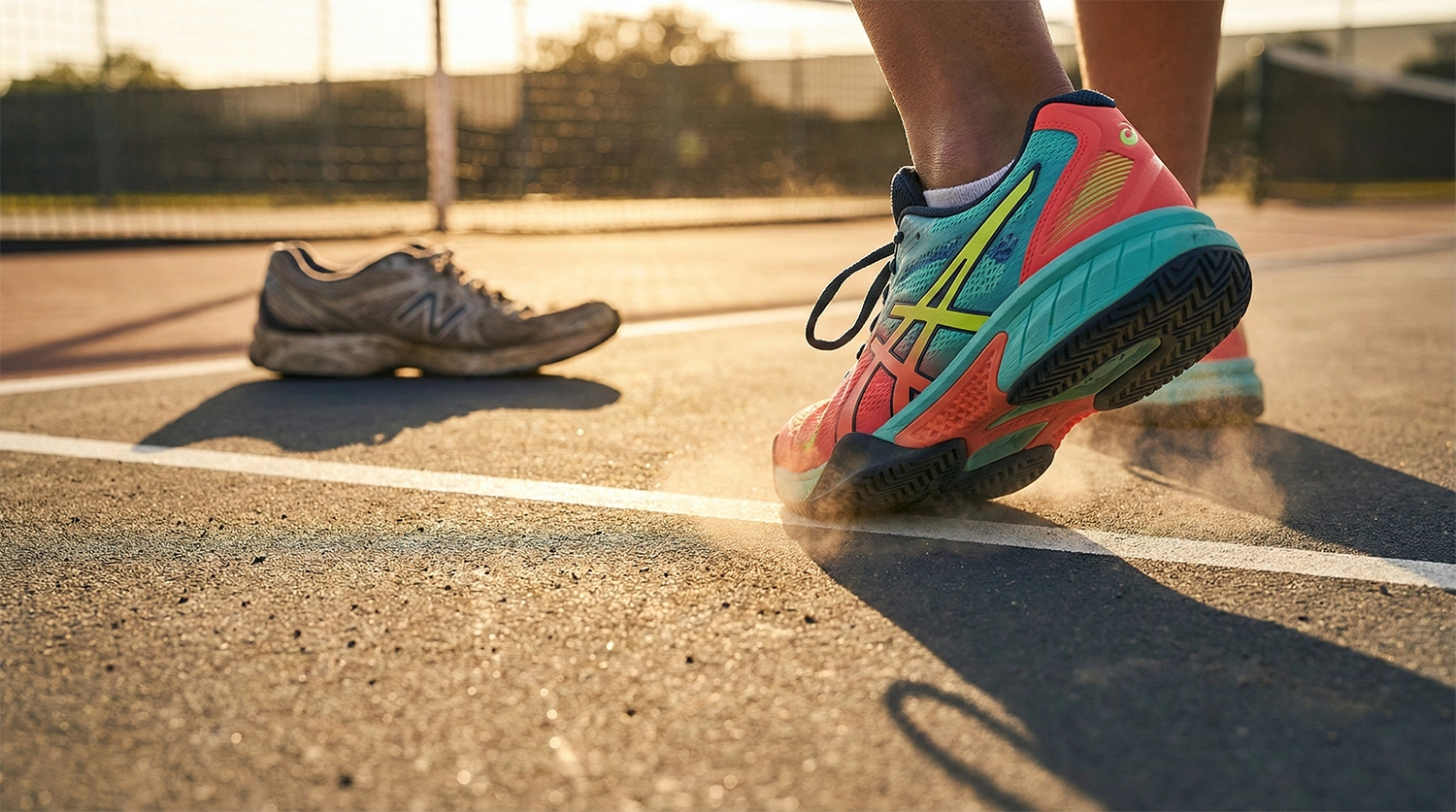
Introduction Here is the most dangerous rookie mistake you can make on the pickleball court: wearing running shoes.
You wouldn’t play basketball in flip-flops or hike a mountain in dress shoes. Yet thousands of beginners step onto the hard court in running shoes every single day—and many end up limping off with a rolled ankle, a torn ligament, or worse.
Why? Because running shoes are engineered for one direction: forward. Pickleball demands something completely different. You are constantly cutting laterally, pivoting on a dime, and planting your foot to stop in a split second. Running shoes don’t just fail to support these movements—they actively work against them.
Your footwear is the foundation of your game. Get it wrong, and you are risking injuries that could sideline you for weeks. Get it right, and you will move faster, feel more confident, and play pain-free. (Upgrading your shoes is just as important as upgrading your paddle. If you are still playing with a cheap wooden paddle, see our top picks for the [Best Pickleball Paddles Under $100]).
This guide breaks down everything you need to know about pickleball shoes in 2026—from the anatomy of proper court footwear to how to find your perfect fit.
Pickleball Shoes vs. Tennis Shoes vs. Running Shoes
Not all athletic shoes are created equal. The differences aren’t just marketing—they are rooted in biomechanics and injury prevention.
Running Shoes: Built for Forward Motion Only
Running shoes are designed with one goal: propelling you forward efficiently. They feature thick, cushioned midsoles to absorb the impact of heel strikes. The outer edges are often soft and rounded to facilitate a smooth heel-to-toe roll.
Here is the problem: when you pivot or cut laterally in running shoes, those soft edges become a massive liability. When you push off sideways, the thick foam compresses unevenly, and your foot easily slides over the edge of the sole, resulting in a severe lateral ankle sprain. Furthermore, the thicker midsole raises your center of gravity, creating a longer lever arm that increases the physical force of an ankle roll. Bottom line? Running shoes are physically dangerous on a pickleball court.
Tennis Shoes: Close, But Not Perfect
Tennis shoes share many features with pickleball shoes—they are built for lateral movement, quick stops, and hard-court traction. They typically have reinforced uppers, non-marking rubber outsoles, and lateral flanges for side-to-side stability.
So, can you use tennis shoes for pickleball? Yes. However, tennis shoes are often heavier and built for a larger court with more room to accelerate. Pickleball courts are smaller, meaning you are making quicker, shorter pivots and spending more time in explosive, short-burst rallies at the kitchen line.
Pickleball Shoes: Purpose-Built for Court Performance
Pickleball shoes take the best protective elements of tennis shoes but optimize them for the specific demands of the smaller court. They feature:
- Maximum Lateral Stability: Stiff, reinforced uppers to resist side-to-side blowout.
- Lower Profile: Thinner, firmer midsoles that keep your ankle closer to the ground, significantly reducing ankle sprain risk.
- Lightweight Construction: Materials that balance durability with the agility needed for fast hand-battles at the net. (Fast footwork requires fast hands. Pair your new shoes with one of the [Best Lightweight Pickleball Paddles] for maximum kitchen domination).
The Anatomy of a Proper Court Shoe
Understanding what makes a good pickleball shoe means knowing how each component protects you. Let’s break it down from the ground up.
Outsole: Grip and Court Protection
The outsole is the rubber layer that contacts the court. In pickleball shoes, it serves critical functions:
- Non-marking rubber: Indoor and outdoor courts require shoes that won’t leave scuff marks. This isn’t just a courtesy—most dedicated facilities will ban you from the courts if you wear marking soles.
- Tread patterns for hard courts: Unlike running shoes with aggressive dirt lugs, pickleball shoes feature flat, low-profile tread (often a herringbone pattern) or circular pivot points under the forefoot. These designs maximize traction on smooth, hard surfaces without catching unpredictably and twisting your knee.
- Toe Drag Durability: Pickleball players drag their toes frequently on serves and low dinks. Quality court shoes include extra rubber reinforcement in the toe box area to resist abrasion.
Midsole: The Balance Between Cushion and Court Feel
The midsole provides shock absorption. Here is the tradeoff: thicker, softer midsoles offer more cushion but reduce stability and “court feel.” Thinner midsoles keep you closer to the ground, improving your reaction time and drastically lowering the chance of a rolled ankle. Pickleball shoes strike a middle ground, favoring a slightly firmer feel for explosive lateral push-offs.
Upper: Containment and Breathability
The upper must lock your foot in place. Thicker materials (like synthetic leather or TPU overlays) wrap up the sides to create a secure fit that prevents your foot from sliding off the footbed during violent side-to-side lunges.
How to Find Your Perfect Fit
Even the most advanced shoe technology won’t help if your shoes don’t fit properly.
1. The Thumbnail Test When standing, you should have about a thumbnail’s width of space between your longest toe and the end of the shoe. This prevents jamming your toes during sudden stops (which causes black toenails). Too much space, however, will cause your foot to slide forward, leading to severe blisters.
2. Locked-In Heel Your heel should feel completely snug. If your heel lifts or slips when you walk, the shoe is either too big or the wrong shape for your foot. Heel slippage destroys your ability to change direction quickly and efficiently.
3. Width Considerations Court shoes require a tight fit for stability, but they should not pinch. If you have wide feet, do not just “size up” in length, as this will create a tripping hazard. Look specifically for brands that offer “Wide” (EE) options, such as New Balance, Skechers, or specific ASICS models.
When to Replace Your Shoes (The 6-Month Rule)
Worn-out shoes are a hidden injury trap. Even if your shoes look fine on the outside, the internal cushioning and support structures break down rapidly.
- The Midsole Compression Test: Press your thumb firmly into the side of the foam midsole. If it feels rock hard or shows permanent visible wrinkles, the foam has died and lost its shock-absorbing ability. Playing on dead foam transfers all the court impact directly to your knees and lower back.
- Bald Outsoles: Check the rubber on the bottom of your shoes. If the tread pattern is worn smooth and bald under the ball of your foot or the heel, you have lost your traction. Playing on bald shoes is like driving on bald tires on an icy road.
- The Lifespan: If you play 3 times a week, expect a quality pair of court shoes to last roughly 4 to 6 months before the internal support fails. When in doubt, replace them early—new shoes are always cheaper than physical therapy.
FAQ: Pickleball Shoes
Can I wear indoor volleyball shoes for outdoor pickleball? If you play outdoors on a hard court (like asphalt or concrete), absolutely not. Volleyball shoes are designed for smooth, polished indoor gym floors. The soft rubber on a volleyball shoe will be shredded to pieces in a matter of weeks on an outdoor hard court.
Do I need different shoes for indoor vs. outdoor pickleball? If you play indoors on a gym floor, you need an “Indoor Court Shoe” (which has a softer, stickier gum-rubber sole). If you play outdoors on hard courts, you need an “Outdoor Court Shoe” (which has denser, highly durable rubber). Using an outdoor shoe indoors will make you slip, and using an indoor shoe outdoors will destroy the sole instantly.
Should I wear two pairs of socks? Some players wear two pairs of socks to prevent blisters, but this can make your shoes fit too tightly and reduce breathability. A better solution is to invest in high-quality, moisture-wicking athletic socks designed with padded strike zones and blister-prevention technology.
Conclusion
You can play pickleball with a borrowed paddle. You can play on a cracked public court. But you cannot afford to compromise on your footwear.
Your shoes are the only piece of equipment that connects you to the court. They determine how quickly you can react, how safely you can pivot, and how well you can protect your joints from the brutal, repetitive impact of hard-court play.
Investing in proper, dedicated pickleball shoes isn’t just about performance—it is an insurance policy against severe ankle and knee injuries. Understand the anatomy of the shoe, get properly fitted, and replace them the moment the tread goes bald or the foam dies. Your body will thank you, and your game will elevate.
(Ready to secure your footing? Check out our upcoming guides on the best pickleball shoes tailored specifically for men and women on the court).