
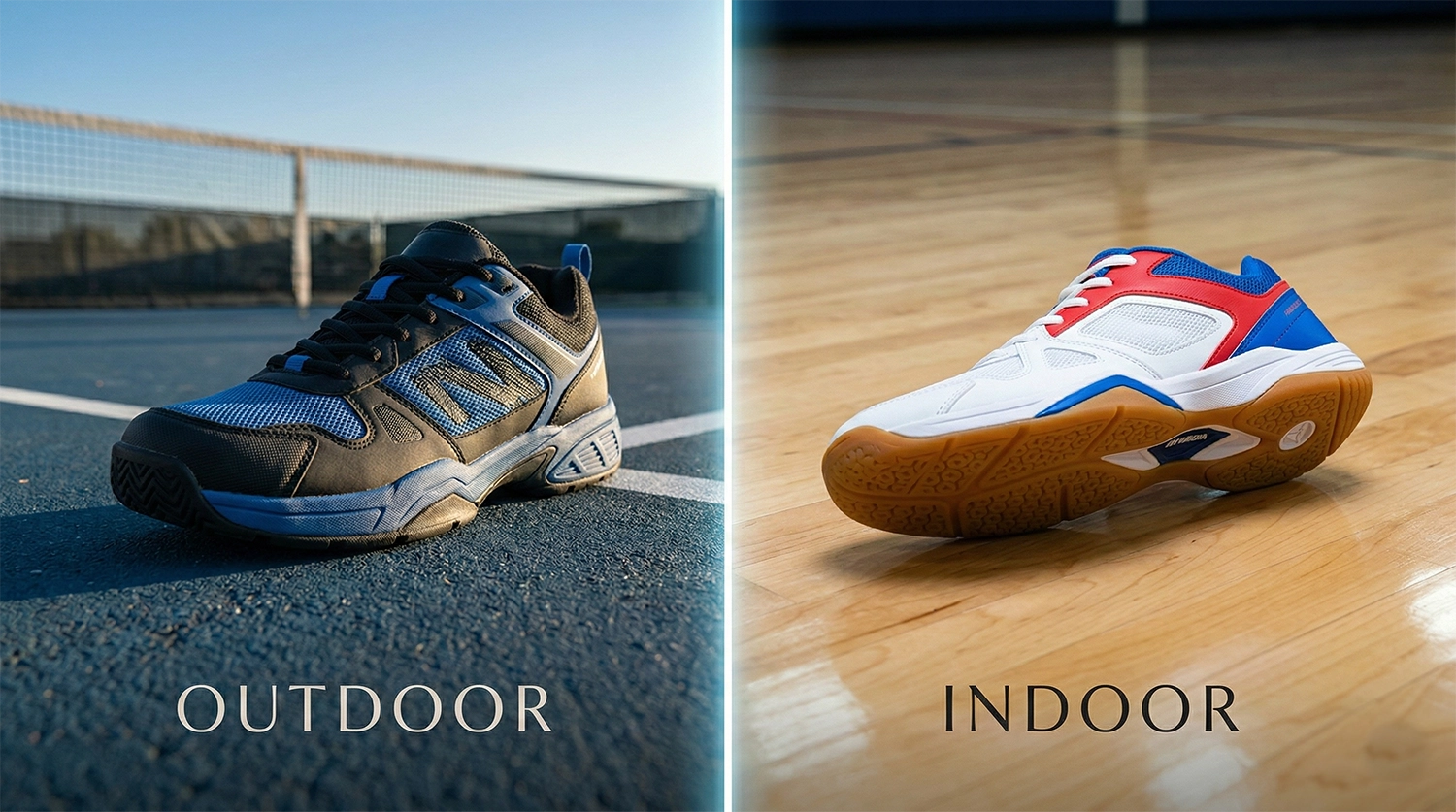
IntroductionChoosing between indoor vs outdoor pickleball shoes is one of the most important decisions you’ll make as a player. If you’re playing in running shoes, you’re actively asking for a severe ankle sprain.
But once you realize you need actual court shoes, you face another critical decision: Indoor vs. Outdoor. Many beginners think a court shoe is just a court shoe. That is a dangerous myth. The physics of a slick, wooden gym floor are completely different from the rough, abrasive surface of an outdoor asphalt court. Wearing the wrong shoe on the wrong surface will either destroy the shoe in a week or leave you sliding across the court like you’re playing on ice.
Here is the brutal truth about the differences between indoor and outdoor pickleball shoes, and why choosing the right one is non-negotiable for your physical health.
Table of Contents
1. Outdoor Pickleball Shoes: What Makes Them Different
Outdoor pickleball is played on hard courts—usually asphalt or concrete coated with acrylic and sand. This surface is basically sandpaper. It is designed to grip the ball, but it will absolutely shred soft footwear.
The Outsole (Hard Rubber): Outdoor shoes are built like armored tanks. The outsole is made of high-density, durable rubber designed to withstand the brutal friction of concrete. If you look at the bottom of an outdoor shoe, you will usually see a deep, aggressive “herringbone” (zigzag) tread pattern. This pattern allows the shoe to grip the gritty surface securely while allowing just enough “give” so you don’t snap your ankle when you stop suddenly.
Durability and Toe Guards: Because outdoor courts are so abrasive, players who drag their toes (especially on serves or lunges) will tear a hole in standard shoes in days. Quality outdoor shoes feature reinforced toe drag guards (often made of thick polyurethane or Kevlar-blended materials) to prevent premature blowouts.
(Ready to buy? Check out our strictly tested guides for the [Best Men’s Pickleball Shoes in 2026] and the [Best Women’s Pickleball Shoes in 2026]).
Key Features of Outdoor Shoes:
- Heavy-duty, dense rubber outsoles.
- Deep herringbone tread patterns for grit-grip.
- Reinforced toe drag guards.
- Slightly heavier and stiffer for maximum joint stability.
2. The Anatomy of an Indoor Pickleball Shoe
Indoor pickleball is usually played on polished wooden gym floors or synthetic rubberized multi-sport surfaces. There is no grit. There is no sandpaper friction. Instead, you are fighting against a smooth, slick surface where dust easily accumulates.
The Outsole (Soft Gum Rubber): If you wear hard outdoor rubber on a wooden floor, you will slide out of control. Indoor pickleball shoes use a much softer, stickier rubber—often referred to as a “gum sole” (which usually has a yellowish, translucent look). This soft rubber acts like a squeegee, physically gripping the slick wood and preventing you from slipping when you make a hard lateral cut.
Weight and Flexibility: Because indoor shoes don’t need heavy armor to protect against concrete, they are significantly lighter and more flexible than outdoor shoes. This allows for faster footwork and a more natural court feel. Furthermore, indoor shoes are strictly “non-marking,” meaning they won’t leave ugly black scuff marks all over the local community center’s gym floor.
Key Features of Indoor Shoes:
- Soft, sticky gum rubber outsoles.
- Lighter and highly flexible upper materials.
- Non-marking soles (mandatory for most gyms).
- Less toe-drag armor required.
3. Indoor vs Outdoor Pickleball Shoes: The Dangerous Myth of Cross-Compatibility
The most common question beginners ask is: “Can I just buy one pair of shoes and use them for both indoor and outdoor play?”
Technically, yes. Functionally, it’s a terrible idea. Here is what actually happens:
- Wearing Indoor Shoes Outside: The rough concrete will chew through the soft gum rubber outsole in less than a month. You are throwing your money in the trash. The lack of heavy lateral support also puts your ankles at risk on the hard pavement.
- Wearing Outdoor Shoes Inside: The hard, dense rubber cannot grip the smooth wooden floor. Dust will stick to the hard rubber, turning your shoes into ice skates. You will lose your balance, miss shots, and risk a severe groin or knee injury from slipping.
(Note: If you suffer from foot pain or bunions, forcing your foot into the wrong shoe will make it infinitely worse. Always ensure you are wearing the correct width. Read our medical breakdown of the [Best Pickleball Shoes for Wide Feet]).
FAQ:
Can I wear indoor volleyball shoes for indoor pickleball? Yes. In fact, many professional indoor pickleball players prefer high-end volleyball shoes. They are designed for the exact same slick wooden floors and explosive lateral movements, featuring the sticky gum rubber soles you need.
How long should a pair of outdoor pickleball shoes last? If you play aggressively 3 to 4 times a week on hard outdoor courts, expect your shoes to last 3 to 6 months before the tread wears flat. Once the herringbone tread is gone, the shoe is “dead” and no longer safe for lateral movement, even if the upper part looks fine.
What happens if I wear running shoes on the court? Running shoes have a high heel drop and thick, squishy midsoles designed for forward momentum. They have zero lateral support. When you lunge sideways for a shot in running shoes, your foot will slide over the edge of the sole, almost guaranteeing a rolled or sprained ankle. Never wear running shoes for racket sports.
According to the USA Pickleball Association, proper footwear is essential for safe play.
Conclusion: Indoor vs Outdoor Pickleball Shoes – Match the Shoe to the Surface
The bottom line on indoor vs outdoor pickleball shoes: stop compromising your safety to save a few dollars. Your knees, ankles, and lower back absorb massive amounts of kinetic energy every time you lunge for a dink at the kitchen line.
If you play exclusively outside, buy a heavy-duty outdoor court shoe with a 6-month outsole warranty. If you play in a gym, buy a dedicated indoor gum-sole shoe. If you play both, you need two pairs of shoes. It is that simple.
Treat your footwear as protective medical equipment, not just a fashion accessory.